How to Track Drug Pipelines: A Complete Guide for Biopharma Research
Linda
Drug pipeline tracking is essential for biopharma research, BD, competitive intelligence, and strategy teams. This article explains how Noah AI helps teams search pipeline assets, review development status, compare competitors, and turn pipeline records into structured insights.
Drug pipeline tracking is a core workflow for biopharma research, business development, competitive intelligence, and strategy teams. Teams need to understand which assets are in development, which companies are active, what targets and modalities are being tested, and how programs are moving across indications and clinical stages.
The challenge is that pipeline information is often fragmented across company updates, clinical trial records, regulatory signals, conference data, and market intelligence sources. A simple keyword search is rarely enough. Teams need structured ways to search assets, compare development status, and turn pipeline records into decision-ready insights.
Noah AI supports this workflow with a dedicated Drug Pipeline database and Agent-based analysis. Users can search pipeline assets by drug, target, company, indication, modality, phase, and development status, then use Noah AI to summarize competitive dynamics, identify strategic gaps, and prepare research-ready pipeline briefings.
Why Drug Pipeline Tracking Is Difficult
Drug development rarely follows a simple linear path. A single target may have multiple assets across different companies, modalities, clinical stages, and indications. One company may have approved products, late-stage trials, earlier pipeline programs, and regional development strategies at the same time.
For biopharma teams, the work is not only to find a drug name. They also need to answer questions such as: which companies are active, which assets are advancing, which indications are being tested, what modality is being used, and where competitive gaps may remain.
This is why pipeline tracking needs more than general search. It needs structured pipeline data, filters that match biopharma workflows, and a way to turn records into competitive interpretation.
What Makes Noah AI Useful for Drug Pipeline Tracking
Noah AI is useful because pipeline tracking starts from structured biopharma data, not from a blank prompt. Users can begin in the Drug Pipeline database, filter assets by key development attributes, inspect pipeline records, and then use Agent Mode to turn those records into competitive or strategic analysis.
This makes the workflow more specific than a general AI summary. Noah AI helps users move through the core pipeline research steps: search, review, compare, and interpret.
Step 1: Search Pipeline Assets by Drug, Target, Company, or Indication
In Noah AI Drug Pipeline, users can search pipeline assets using structured criteria such as drug name, company, target, indication, drug modality, route of administration, phase, and development status. For example, a user can begin by searching for pembrolizumab or PD-1-related assets to understand the broader competitive context around immuno-oncology programs.
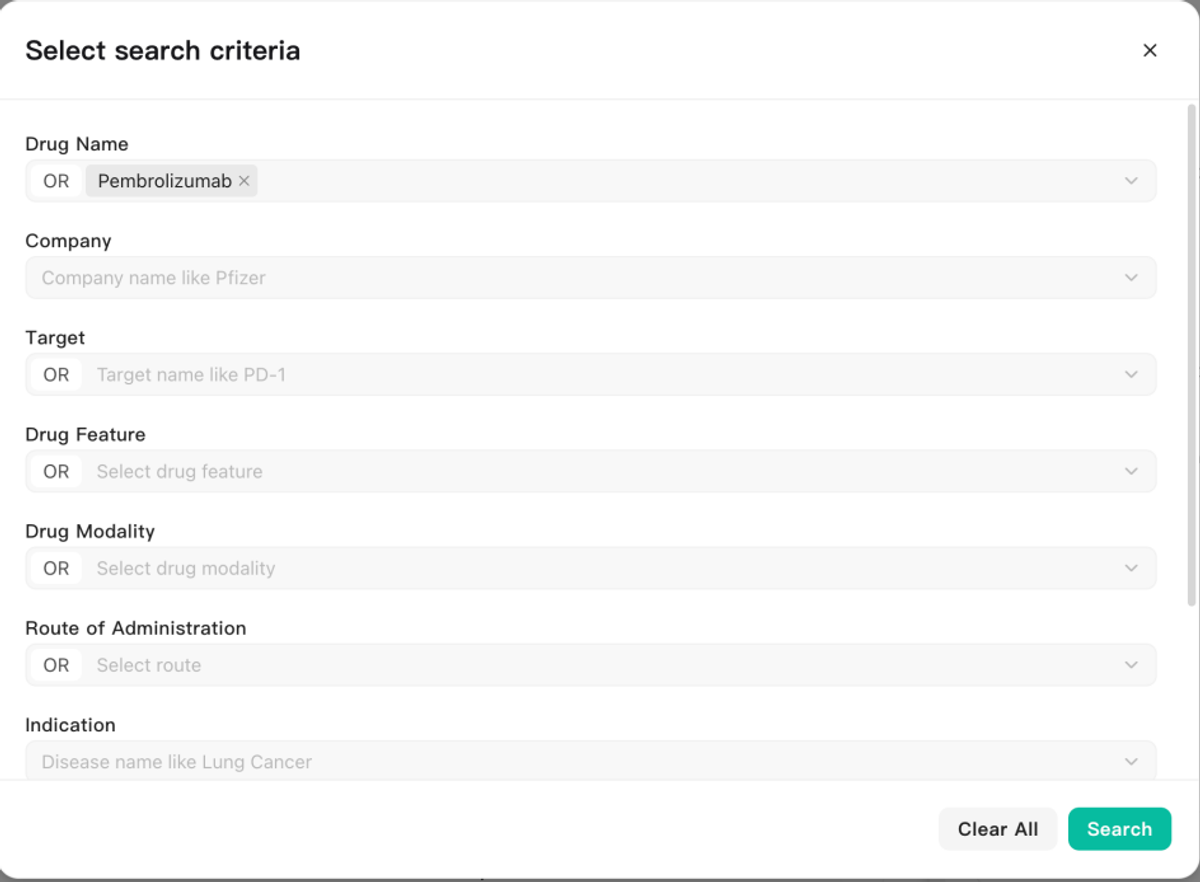
Figure 1. Noah AI Drug Pipeline allows biopharma teams to search pipeline assets by drug name, target, company, indication, modality, phase, and development status.
Step 2: Review Pipeline Records and Start Competitive Analysis
After search results are returned, users can review pipeline records in a structured view. The table format helps teams scan assets, names, companies, and related pipeline attributes. Users can also select records and continue the analysis through the built-in chat workflow. This is where Noah AI becomes more than a static database: selected pipeline data can become the starting point for competitive landscape review.
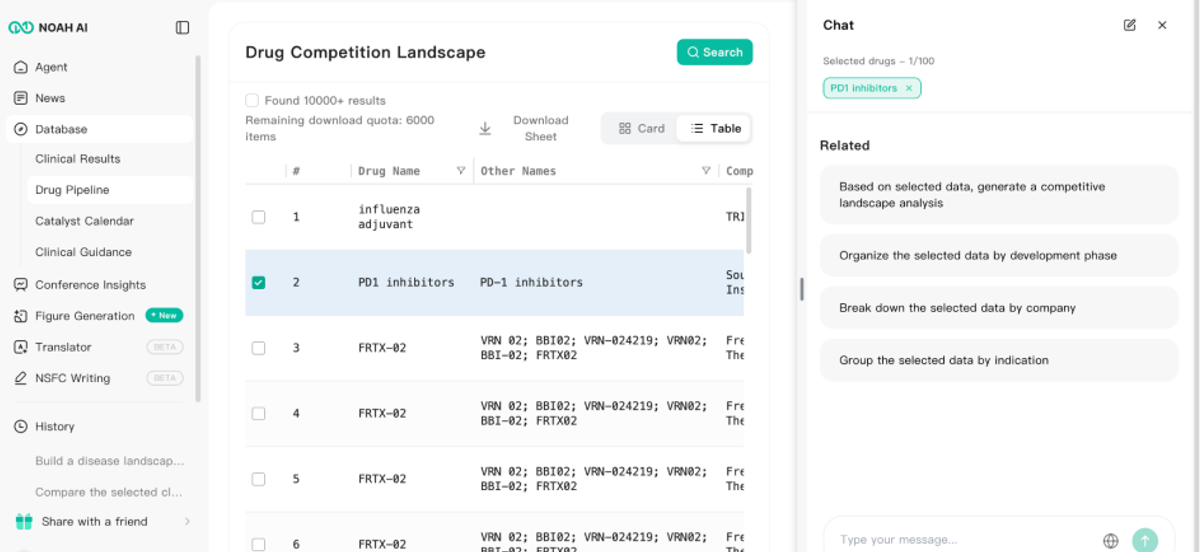
Figure 2. Noah AI Drug Pipeline allows users to select pipeline assets and continue analysis through the built-in chat workflow for competitive landscape review.
Step 3: Turn Pipeline Data into Competitive Intelligence
Pipeline records become more useful when teams can connect them to strategic questions. For example, teams may ask Noah AI to organize selected data by company, development phase, indication, modality, or competitive positioning. This can support BD screening, strategy discussions, Medical Affairs planning, market assessment, or investment research.The goal is not to replace expert analysis. The value is to reduce manual work and create a structured starting point that teams can review, challenge, and refine.
Drug Pipeline Tracking Tasks and How Noah AI Supports Them
| Pipeline Tracking Task | What Teams Need | How Noah AI Helps |
|---|---|---|
| Asset search | Drug, target, company, indication | Filters pipeline records through structured fields |
| Development tracking | Phase, status, modality, program progress | Organizes pipeline assets by development stage |
| Competitor review | Similar assets and competing companies | Compares pipeline activity across companies and targets |
| Strategy briefing | Key risks, gaps, and opportunities | Turns pipeline data into structured research insights |
Common Use Cases for Biopharma Teams
Business Development and Licensing
BD teams can use Noah AI to screen pipeline activity around a target, modality, indication, or company before deeper diligence.
Competitive Intelligence
Competitive intelligence teams can review which companies are active, which assets are advancing, and where similar programs may compete.
Medical and Commercial Strategy
Medical Affairs, market research, and strategy teams can use pipeline views to understand where future evidence or market shifts may emerge.
Research Planning
R&D teams can review pipeline density around a target or disease area to understand development direction and differentiation opportunities.
When Should Teams Use Noah AI for Pipeline Research?
- Searching pipeline assets by drug, target, company, indication, modality, phase, or status
- Reviewing competitive activity around a target or disease area
- Preparing BD, strategy, Medical Affairs, or market research briefings
- Comparing development stages and identifying gaps across companies
- Turning pipeline records into structured research insights for internal discussion
Final Takeaway
Drug pipeline tracking is not just about finding asset names. Biopharma teams need to understand development context, competitive activity, company strategy, and where future opportunities or risks may emerge.Noah AI helps by combining a dedicated Drug Pipeline database with a workflow for structured analysis. Users can search pipeline assets, review records, select relevant data, and turn pipeline information into competitive intelligence and strategy-ready insight.Ready to track drug pipelines with Noah AI? Try Noah AI.
FAQ
What is drug pipeline tracking?
Drug pipeline tracking is the process of monitoring drug development programs by company, target, indication, modality, phase, and development status.
How does Noah AI help track drug pipelines?
Noah AI provides a Drug Pipeline database where users can search and filter pipeline assets, review structured records, and use the built-in chat or Agent workflow to generate competitive or strategic analysis.
Who can use Noah AI for pipeline research?
Biopharma researchers, BD teams, competitive intelligence teams, Medical Affairs, strategy teams, pharma market researchers, and investors can use Noah AI for pipeline research workflows.
Can Noah AI replace expert pipeline analysis?
No. Noah AI helps organize and summarize pipeline information, but outputs should be reviewed by qualified scientific, clinical, regulatory, or business experts before formal use.
Research and Compliance Disclaimer
This article is for research workflow education only. Noah AI can help organize and summarize pipeline information, but outputs should not be used as scientific, regulatory, investment, or business decision-making advice without review by qualified professionals. Users should verify pipeline records, development status, source details, and interpretation before formal use.