
Similar Products to BioRender for Biomedical Scientific Illustration (2026)
Linda
Compare products similar to BioRender for biomedical scientific illustration in 2026, including Noah AI, Mind the Graph, and FigureLabs, with a real research-informed clinical trial figure example.
BioRender is one of the best-known tools for scientific illustration, but researchers looking for a similar product do not all need the same workflow. Some want a large library of scientifically accurate icons. Others want AI to generate an editable first draft. Biomedical researchers may need something more specific: a tool that can use literature or study context to decide what belongs in the figure before the visual is drafted.That makes the useful comparison less about which platform has the longest feature list and more about where the scientific illustration process begins. Is the starting point a research question, a paper, a reference image, a finished scientific story, or simply a need for better visual assets?This guide compares BioRender with Noah AI, Mind the Graph, and FigureLabs through that decision. The goal is to help researchers choose the product that best matches the scientific illustration task they actually need to complete.
Quick Answer
BioRender is a strong fit when researchers want a mature scientific visual library, editable AI-generated figures, and detailed post-generation control. Noah AI is better suited when a biomedical figure should begin from research context, PubMed evidence, or a structured life-science question. Mind the Graph fits template- and illustration-driven scientific communication. FigureLabs is useful when text, PDFs, sketches, or reference images need to become editable scientific figures across broader STEM fields.
Which BioRender-Like Product Fits Your Starting Point?
| If your starting point is... | Best fit | Why | Less suitable when... |
|---|---|---|---|
| A biomedical research question or PubMed literature | Noah AI | Research context can shape the figure structure before generation | Your main need is granular manual editing of every figure element |
| A defined scientific story that needs visual production and editing | BioRender | Large scientific visual library plus editable AI-generated figures | You need literature retrieval to establish the scientific structure first |
| A scientific concept that can be assembled from templates and illustrations | Mind the Graph | 75,000+ scientific illustrations and 300+ templates | The source material needs research-heavy interpretation before visualization |
| Text, a PDF, a sketch, photo, or reference figure | FigureLabs | AI-first multi-input generation with editable SVG/PPTX export | You specifically need a life-science research workflow grounded in PubMed evidence |
Noah AI - Best When Research Context Needs to Shape the Figure
Noah AI is a life-science research platform with a Figure Generation Assistant that accepts text prompts or reference images/files, offers image-quality and content-density controls, and includes examples such as Technical Overview and Clinical Trial Design. Its figure workflow can also retrieve relevant PubMed papers before generation.That positioning matters for biomedical scientific illustration because the hardest part of a figure is often not drawing boxes or arrows. It is determining which relationships, stages, labels, and endpoints must appear in the first place.
A Real KEYNOTE-522 Clinical Trial Figure Test
To make the difference concrete, we used Noah for a clinical trial design task based on KEYNOTE-522 in early-stage triple-negative breast cancer. The request asked the system to verify the study structure from PubMed-indexed evidence before generating the figure. The final visual needed to preserve the population, 2:1 randomization, neoadjuvant treatment, surgery, adjuvant treatment, and the pCR and EFS endpoints.
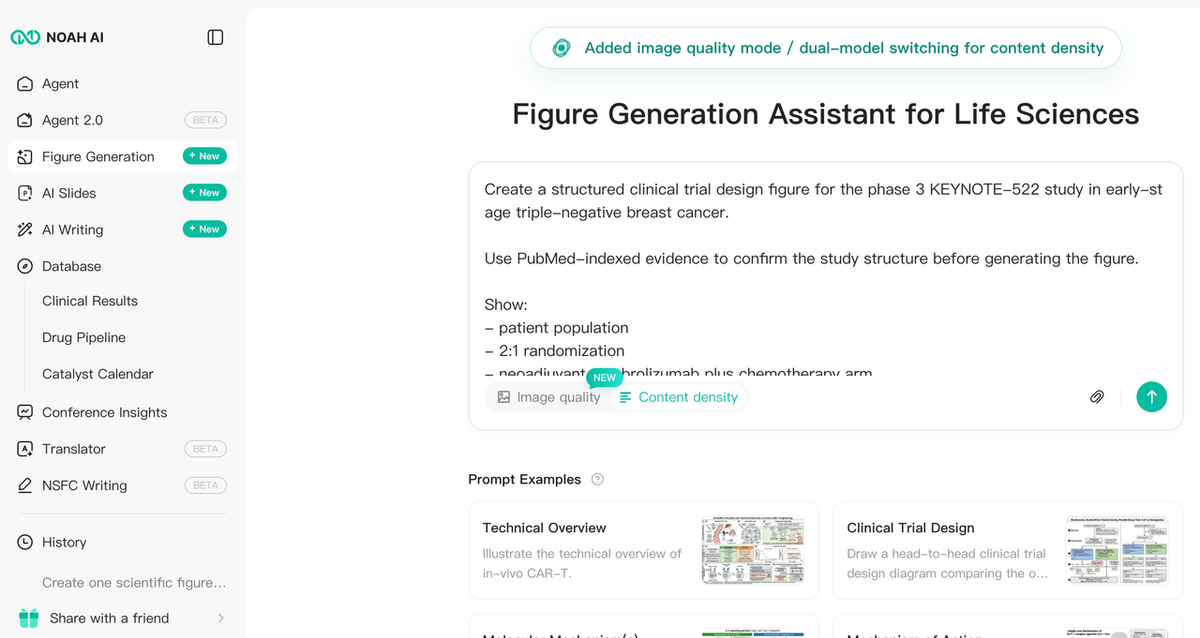
Figure 2. Noah AI retrieves PubMed context to verify the KEYNOTE-522 trial structure before generating the clinical trial figure.
The retrieval step is the most important difference demonstrated by this case. The visible search summary identifies the scientific elements that need to be verified: the patient population, 2:1 randomization, neoadjuvant pembrolizumab or placebo plus chemotherapy, surgery, adjuvant pembrolizumab or placebo, and the pCR and EFS endpoints.For a biomedical figure, this step reduces the gap between “what the study actually did” and “what the figure visually implies.” It does not eliminate the need for researcher review, but it gives the first draft a research-grounded structure rather than relying only on a visual prompt.
From Trial Structure to a Figure Draft
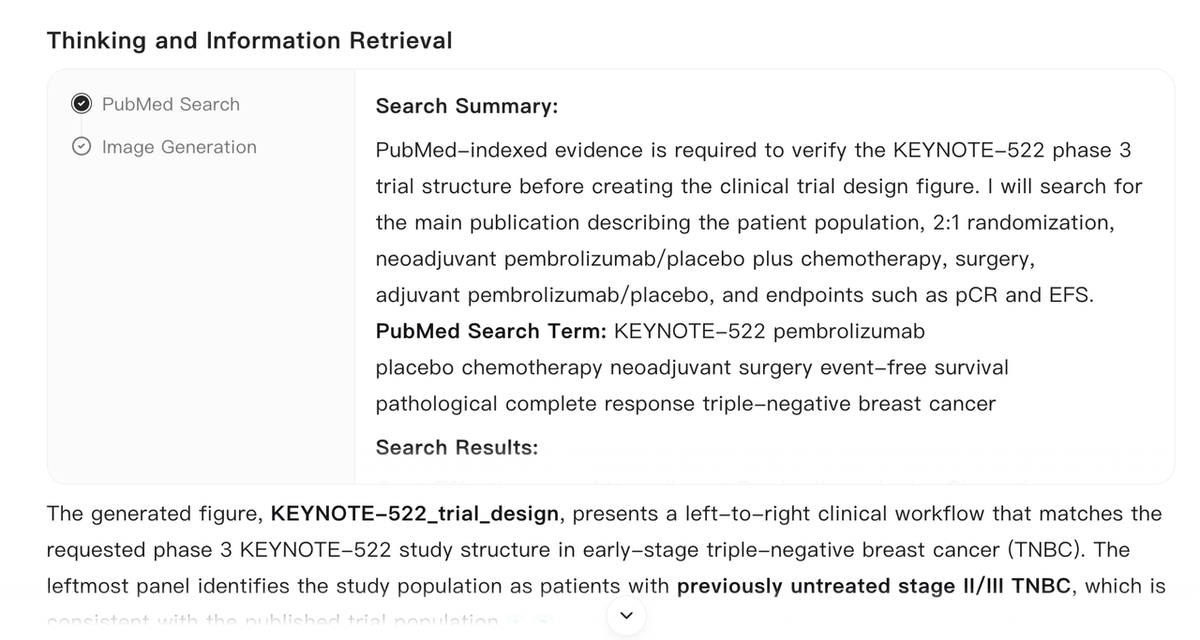
Figure 2. Noah AI retrieves PubMed context to verify the KEYNOTE-522 trial structure before generating the clinical trial figure.
The retrieval step is the most important difference demonstrated by this case. The visible search summary identifies the scientific elements that need to be verified: the patient population, 2:1 randomization, neoadjuvant pembrolizumab or placebo plus chemotherapy, surgery, adjuvant pembrolizumab or placebo, and the pCR and EFS endpoints.For a biomedical figure, this step reduces the gap between “what the study actually did” and “what the figure visually implies.” It does not eliminate the need for researcher review, but it gives the first draft a research-grounded structure rather than relying only on a visual prompt.
From Trial Structure to a Figure Draft
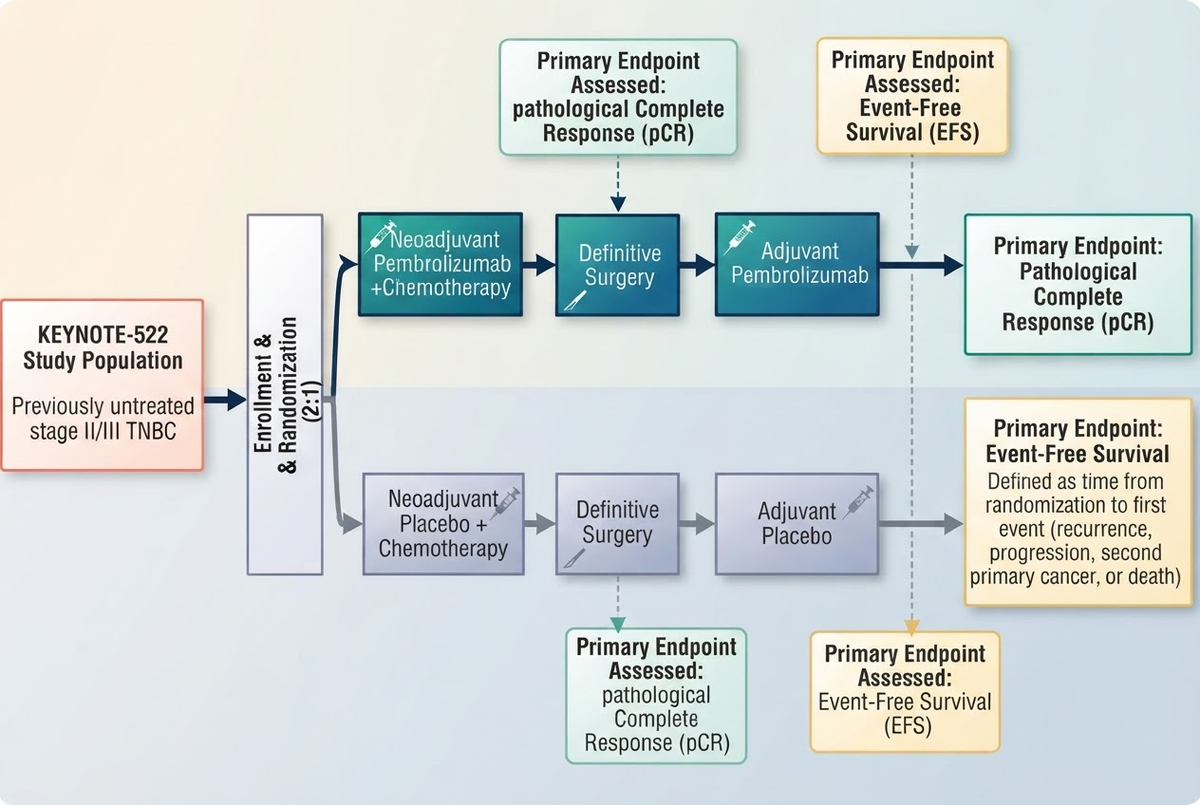
Figure 3. Noah AI converts the verified study structure into a left-to-right KEYNOTE-522 clinical trial design draft.
The generated draft preserves the major relationships required by the task: study population -> 2:1 randomization -> separate neoadjuvant arms -> definitive surgery -> adjuvant treatment -> primary endpoints. That is the concrete product advantage shown by the case: biomedical evidence can help determine the figure structure before visual refinement begins.The figure should still be treated as a draft. Researchers should verify endpoint wording, label placement, treatment sequencing, numerical details, and any repeated or simplified elements against the original publication before using the figure in a manuscript, presentation, regulatory document, or other high-stakes setting.
BioRender - Best for Editable Scientific Illustration and Visual Control
BioRender remains one of the strongest options when the scientific story is already defined and the researcher wants a mature illustration environment. Its current platform includes more than 50,000 scientifically accurate icons and templates, and its AI tools can generate multiple figure previews from text or a reference image.In 2026, BioRender should not be described as a manual-only drag-and-drop tool. Its Generate Editable Figure workflow can create a first draft, refine it through follow-up prompts, and convert the selected output into editable elements including text, images, lines, arrows, and shapes.Choose BioRender when visual refinement, scientific assets, and granular post-generation editing are the main priorities. Choose Noah instead when the figure task benefits from biomedical literature retrieval or research-context interpretation before the visual draft is created.
Mind the Graph - Best for Templates and Scientific Illustration Libraries
Mind the Graph is a strong fit when researchers already understand the scientific message and mainly need scientific illustrations, templates, and layout tools to communicate it clearly.Its current platform advertises more than 75,000 scientifically accurate illustrations across 80+ research fields and more than 300 templates. That makes it useful for scientific figures, graphical abstracts, posters, presentations, and diagrams that can be assembled from a known scientific story.Compared with Noah, Mind the Graph is more asset- and template-driven. It is less focused on retrieving biomedical literature to establish the scientific structure before figure generation.
FigureLabs - Best for AI-First Scientific Illustration Across STEM
FigureLabs takes a more AI-first approach across STEM disciplines. Its current platform supports Text-to-Figure, Image-to-Figure, and Reference-to-Figure workflows, and it can export editable PPTX and SVG files in addition to high-resolution images.This makes FigureLabs particularly relevant when the starting input is already available as text, a PDF, a sketch, a photo, or a reference figure and the user wants to convert that material into an editable scientific visual quickly.Noah is more specifically aligned with life-science workflows where PubMed evidence and biomedical research context are part of the figure-generation process. FigureLabs is broader across STEM and emphasizes multi-input generation and editable output.
BioRender vs Similar Products: Practical Comparison
| Product | Best when... | AI generation | Research-context strength | Editing / output |
|---|---|---|---|---|
| Noah AI | The figure starts from a biomedical research question or literature | Yes | Strongest fit here when PubMed context is part of the task | Generated figure draft; researcher review required |
| BioRender | The scientific story is defined and needs polished visual production | Yes | Scientific domain assets and prompting, but literature retrieval is not the core workflow | Editable AI figures and detailed canvas editing |
| Mind the Graph | Templates and scientific illustration assets are the main need | Available scientific-visual workflows | Primarily template/asset-driven | Drag-and-drop editing and common scientific export formats |
| FigureLabs | Text, PDF, sketch, image, or reference figure needs AI conversion | Yes | Broad STEM figure generation | Editable PPTX/SVG plus high-resolution image export |
Which BioRender-Like Product Should You Choose?
- Choose Noah AI if the illustration needs to begin from biomedical evidence, PubMed literature, or a research-specific life-science question.
- Choose BioRender if you need a mature scientific visual library, editable AI-generated figures, and detailed visual control after generation.
- Choose Mind the Graph if templates and scientific illustration assets are the main requirement.
- Choose FigureLabs if you want AI-first generation from text, PDFs, sketches, photos, or reference images with editable exports.
The important distinction is the starting point. Researchers who already know exactly what the final scientific story should contain may prefer an editing- and asset-heavy environment. Researchers whose challenge is translating research context into a visual structure may benefit more from an evidence-informed workflow.
What AI Scientific Illustration Still Gets Wrong
Scientific figures can look convincing while containing wrong labels, duplicated concepts, oversimplified relationships, misplaced endpoints, or unsupported numerical details. AI-generated outputs should therefore be treated as reviewable drafts rather than scientific authority.Before publication or formal use, verify the figure against the original paper or trusted source material. Check the scientific sequence, terminology, labels, patient population, treatment arms, endpoint definitions, quantitative claims, and whether the visual hierarchy implies relationships that the evidence does not support.
FAQ
What is the best product similar to BioRender for biomedical research?
It depends on the workflow. BioRender is well suited to editable scientific illustration and a large visual library. Noah is particularly relevant when literature or biomedical research context should shape the first figure draft. Mind the Graph is useful for template-driven scientific communication, while FigureLabs is an AI-first option for converting text, PDFs, sketches, and references into figures.
Is there an AI alternative to BioRender?
Yes. Noah AI and FigureLabs both provide AI-driven scientific figure generation, while BioRender itself now also supports AI-generated editable figures. The better choice depends on whether the priority is research-context interpretation, visual editing, scientific assets, or multi-input generation.
Which BioRender alternative can create figures from research papers?
Noah can retrieve relevant PubMed literature as part of its life-science figure workflow, while FigureLabs supports generating figures from text and PDFs. Researchers should still verify the final visual against the source paper.
Which BioRender-like tool is best for clinical trial figures?
Noah is a strong fit when the clinical trial figure should be grounded in PubMed evidence and study context. BioRender is a strong fit when the trial structure is already defined and detailed visual editing is the priority.
Can AI-generated biomedical figures be used directly in publications?
Not automatically. They should be treated as drafts and checked for scientific relationships, terminology, labels, endpoints, numerical details, and source accuracy before formal use.
Final Takeaway
BioRender-like products now solve different parts of the scientific illustration workflow. BioRender emphasizes a mature scientific visual library and editable production; Mind the Graph emphasizes templates and scientific assets; FigureLabs emphasizes AI-first generation from multiple input types.The Noah case demonstrates a different starting point: biomedical evidence itself can help shape the figure structure. For researchers whose main challenge is translating research context into a structured scientific visual - not simply polishing a figure that is already planned - that difference can matter.
Try Noah AI to turn biomedical research context into a structured scientific figure draft.