
Best Free BioRender Alternatives for Scientific Figures (2026)
Linda
Compare Noah AI and BioRender for scientific figure creation, biomedical figure planning, life science diagrams, templates, icons, and research visual communication.
Introduction
Scientific figure creation is no longer only a design task. For biomedical researchers, a strong figure has to communicate research context, mechanism, evidence, and interpretation clearly. A polished diagram can help a paper, grant proposal, poster, or slide deck explain complex science faster than text alone.
Noah AI and BioRender both support scientific visual communication, but they fit different stages of the workflow. BioRender is widely used for polished life science illustrations, icons, and templates. Noah AI is more useful when the researcher needs to move from a biomedical research question or evidence context into a structured scientific figure concept.
This comparison focuses on practical workflow differences: when to use Noah AI, when to use BioRender, and how the two tools can work together.
Quick Takeaway
Use Noah AI when the figure task begins with biomedical research context—such as a research question, literature evidence, or a reference image that needs to be translated into a structured scientific story.
Use BioRender when the main priority is building and refining scientific visuals in a dedicated design environment with scientific assets, AI-assisted figure generation, and detailed canvas editing.
In 2026, both platforms use AI. The more useful distinction is where the workflow begins: Noah is more research-context-first, while BioRender is more figure-design-first.
Is BioRender Free in 2026?
Yes. BioRender currently offers a $0 Basic plan, but the free tier has important limitations.
According to BioRender’s current pricing and licensing information, free users can explore the platform and create a limited number of figures, but figures created under the free plan do not include publication or commercial-use rights. High-resolution and watermark-free publication workflows require an eligible paid plan.
BioRender has also expanded its AI features in 2026. Free users can generate flat AI figure drafts, while converting generated outputs into fully editable figures and accessing more advanced editing capabilities depends on the applicable paid plan.
For researchers evaluating free BioRender alternatives, the important question is therefore not simply whether a tool has a $0 entry point. It is what the free workflow allows you to create, revise, export, and ultimately use.
Side-by-Side Comparison
| Comparison Area | Noah AI | BioRender |
|---|---|---|
| Best for | Biomedical figure planning and research-context figure generation | Polished life science illustrations, templates, and scientific icons |
| Starting point | Research question, biomedical topic, or literature-backed context | Blank canvas, icon library, template gallery, or existing figure idea |
| Main strength | Turns complex biomedical ideas into structured multi-panel scientific figures | Provides ready-made templates, icons, and a visual editor for manual figure building |
| Workflow type | AI-assisted research-to-figure workflow | Manual drag-and-drop scientific illustration workflow |
| Best user | Medical researchers, life science teams, evidence teams, and biopharma professionals | Researchers who already know what they want to draw and need polished visuals |
| Key limitation | Final figures still need scientific review and visual polishing | Users still need to plan the scientific story and assemble the figure manually |
Why Scientific Figure Creation Needs Both Context and Visual Design
A scientific figure is not only a visual asset. It is a structured argument. In biomedical research, a good figure needs to show what matters, what connects to what, and how the reader should interpret the evidence or mechanism.
This is where the difference between Noah AI and BioRender becomes important. Noah AI is useful earlier in the process, when the researcher is still translating scientific context into a visual structure. BioRender is useful later in the process, when the researcher already has a clear figure idea and needs templates, icons, and layout control.
Noah AI Output: From Biomedical Research Context to Scientific Figure
Noah AI is most useful when scientific figure creation begins with a biomedical research problem rather than only a visual-design task.
A researcher can start from a research question, biomedical topic, literature context, text prompt, or reference image and use Noah to develop a structured figure draft around the scientific story.
In the example below, Noah AI turns a biomedical topic about GLP-1 receptor agonists and cardiovascular outcomes in type 2 diabetes into a three-panel scientific figure combining mechanism, cardiovascular outcomes evidence, and clinical interpretation.
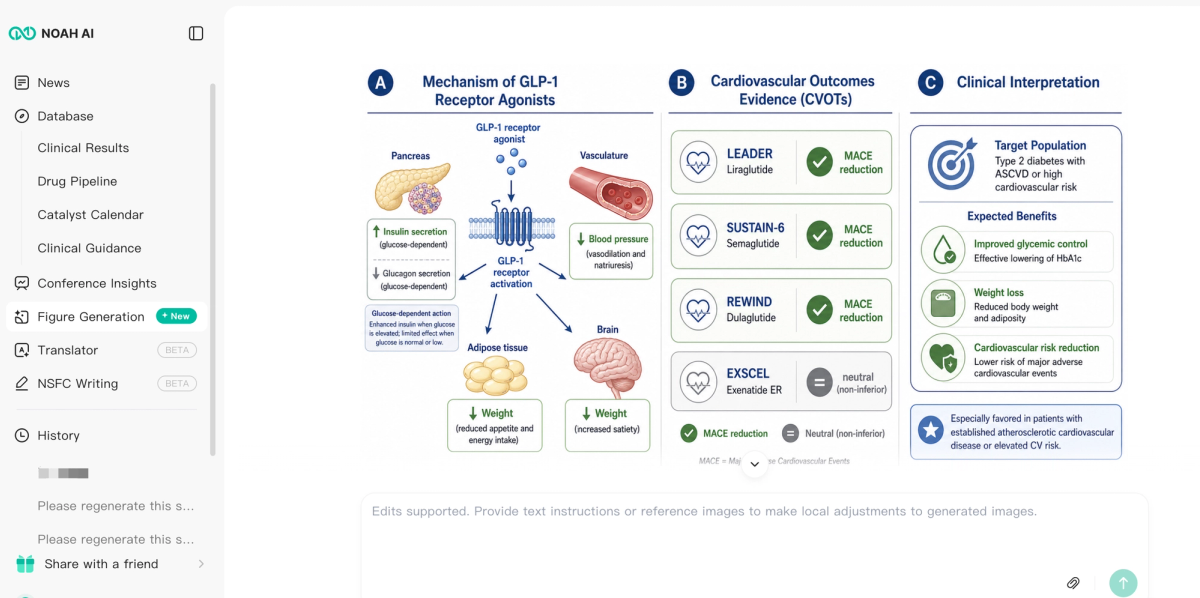
Figure 1. Noah AI turns biomedical research context into a structured scientific figure for research communication.
This workflow is useful when the difficult part is deciding what scientific information belongs in the figure and how it should be organized.
Noah can be used alongside broader biomedical research workflows, allowing researchers to work from evidence or scientific context before moving into figure generation and revision.
Researchers should still review generated biology, terminology, labels, relationships, and visual emphasis before using a figure in a publication, grant, poster, or presentation.
Learn more about Noah AI Scientific Figure Generation.
This type of output is useful when the main challenge is not only drawing a figure, but deciding how a scientific story should be organized visually. Noah AI is especially helpful because users can first search and synthesize relevant biomedical literature, then turn that research context into a structured figure concept. The figure can also be revised through follow-up instructions, and users can upload a reference image to generate visuals in a similar style.
For new users, Noah AI offers free credits, making it easier to test the research-to-figure workflow before starting a larger project. Noah AI does not remove the need for expert review, but it gives researchers a stronger starting point for literature-informed figure planning, editable figure generation, and style-guided scientific communication.
BioRender Output: AI-Assisted Scientific Illustration and Visual Editing
BioRender is a strong option when the priority is creating and refining scientific visuals inside a dedicated scientific-design environment.
Its workflow now extends beyond templates and manual drag-and-drop editing. In 2026, BioRender supports AI-assisted figure generation, including generated figure drafts and editable outputs, alongside its scientific icon library, templates, and canvas-based editing tools.
This makes BioRender useful when researchers want to:
- generate an initial scientific visual from a prompt;
- work from scientific templates and assets;
- adjust individual visual elements;
- refine arrows, labels, shapes, and layout;
- and bring a figure toward a polished final design.
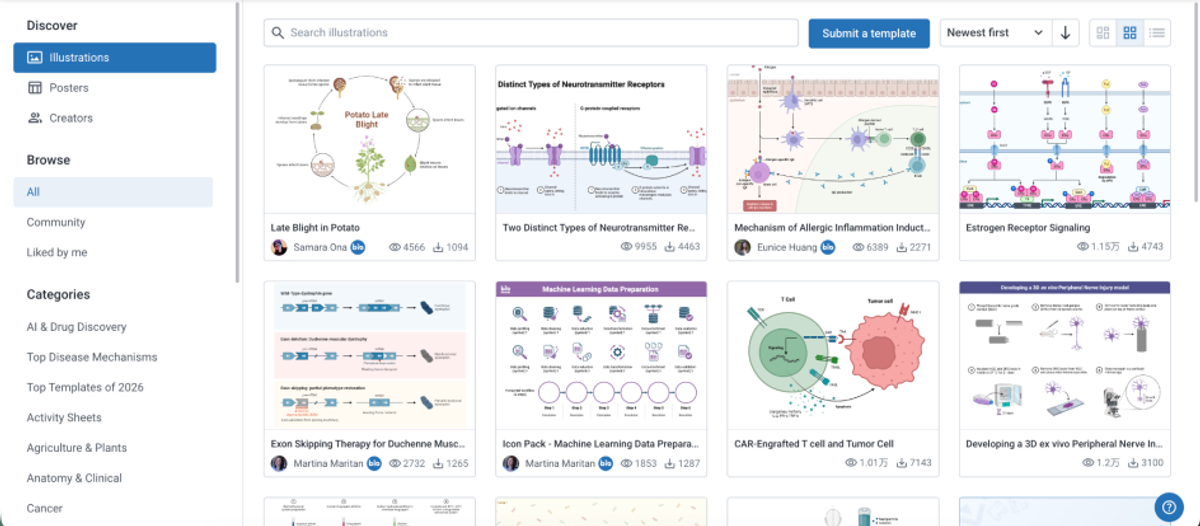
Figure 2. BioRender provides scientific assets, AI-assisted generation, templates, and visual editing tools for scientific figure creation.
The main distinction from Noah is therefore not simply “AI versus manual design.”
For this comparison, the more useful distinction is workflow emphasis: Noah is oriented toward connecting biomedical research context with figure generation, while BioRender provides a figure-centered scientific design environment with extensive visual editing capabilities.
When Should You Use Noah AI?
- You are starting from a biomedical research question rather than a finished figure idea.
- You need help turning research context into figure structure, panel logic, labels, or captions.
- · You want a multi-panel scientific figure that combines mechanism, evidence, and interpretation.
- · You are working in medical research, life sciences, biopharma, or evidence communication.
- · You want to move faster from scientific thinking to visual communication.
When Should You Use BioRender?
- You already know what you want to draw and need polished icons or templates.
- You need a clean life science diagram for a paper, poster, slide, or graphical abstract.
- You want manual control over placement, icons, labels, and final design details.
- Your team needs a consistent visual style across projects.
- You prefer a template-based editor instead of an AI-generated starting point.
Can You Use Noah AI and BioRender Together?
Yes. A strong workflow can use both tools. Noah AI can help researchers plan the scientific story and generate a structured figure concept. BioRender can then be used to manually refine the visual design, adjust icons, and polish the figure for publication or presentation.
In practice, this means Noah AI can support the research-to-figure step, while BioRender can support the figure-to-polished-visual step.
Final Takeaway
Noah AI and BioRender now both support AI-assisted scientific figure creation, but they emphasize different parts of the workflow.
Noah AI is the stronger fit when scientific figure creation is closely connected to biomedical research context, literature, evidence synthesis, or a research question that still needs to be translated into a visual structure.
BioRender is the stronger fit when the figure itself becomes the main workspace and researchers want scientific assets, AI-assisted generation, and detailed visual editing in one design environment.
For researchers searching for a free BioRender alternative, the best choice therefore depends on the actual bottleneck:
research context → figure structure: Noah AI figure generation → detailed visual refinement: BioRender
Researchers can also use the two workflows together rather than treating them as mutually exclusive.
Create Scientific Figures with Noah AI
Turn biomedical research questions, literature context, and reference images into structured scientific figure drafts with Noah AI.
Free to use · Free credits included · No credit card required
Create a Scientific Figure with Noah AI →
Create Scientific Figures with Noah AI
Turn biomedical research questions, literature context, and reference images into structured scientific figure drafts with Noah AI.
Free to use · Free credits included · No credit card required
Create a Scientific Figure with Noah AI →
FAQ
Is Noah AI a BioRender alternative?
Noah AI can support some workflows that overlap with BioRender, but the two tools are different. Noah AI is stronger for research-context figure planning and structured biomedical figure generation. BioRender is stronger for manual scientific illustration with templates and icons.
What is the main difference between Noah AI and BioRender?
Noah AI starts from biomedical research context and helps generate a structured scientific figure. BioRender starts from templates, icons, and a visual editor that researchers use to manually create polished figures.
Which tool is better for biomedical figure planning?
Noah AI is better suited for biomedical figure planning because it helps organize mechanism, evidence, and interpretation into a visual structure.
Which tool is better for polished life science illustrations?
BioRender is a strong choice for polished life science illustrations because it provides templates, scientific icons, and manual design control.
Can researchers use Noah AI and BioRender together?
Yes. Researchers can use Noah AI to plan the scientific story and figure structure, then use BioRender to polish the visual layout with icons and templates.
Research and Publication Disclaimer
This article is for research workflow education only. AI- or software-generated scientific figures should be reviewed by qualified researchers before use in publications, grants, posters, or presentations.
Related Research Guides
- The 10 Best Scientific Figure Creation Tools in 2026
- How to Create Effective Scientific Figures for Research Publications with Noah AI
- Free BioRender Alternative for Reference-Image-Based Scientific Figures (2026)
- Best BioRender Alternatives for PubMed-Informed Scientific Figures (2026)
- Best AI Graphical Abstract Makers for Research Papers (2026)