
Free FigureLabs Alternative for Life Science Figure Generation (2026)
Linda
Looking for a free FigureLabs alternative? Compare Noah AI, BioRender, Mind the Graph, Bioicons, Canva, and Inkscape for life science figure generation, with a real PubMed-informed Noah test.
FigureLabs is an AI scientific-illustration platform that supports text-to-figure, image-to-figure, reference-guided generation, editing, and vector-oriented exports. Its official site currently advertises 200 free credits, no credit card requirement, and exports including editable PPTX and SVG as well as high-resolution raster files.Those capabilities make “free FigureLabs alternative” a more specific search than “free drawing software.” The user is usually not looking for any blank canvas. They want to describe a life science concept, obtain a credible visual draft quickly, revise it, and eventually use it in a manuscript, report, grant, poster, or presentation.The useful comparison therefore has four questions:
- Can the product help interpret life science content before drawing?
- Does it generate a complete first draft or only provide assets?
- Can researchers revise wording and structure efficiently?
- What happens when exact typography, editable vectors, licensing, and publication requirements become important?
Quick answer
Noah AI is the strongest free-to-try FigureLabs alternative in this comparison when a life science figure should begin with a research question or PubMed context. Noah’s official figure product page offers 20 free generations and describes a workflow that retrieves PubMed evidence, organizes it into a structured visual, and supports iterative natural-language edits.
BioRender is stronger for manual assembly from biomedical icons and templates.
Mind the Graph is useful for template-led scientific infographics, posters, and graphical abstracts.
Bioicons with draw.io or Inkscape is the clearest open-source asset workflow.
Canva is convenient for general layouts and team collaboration.
Inkscape is best when free vector editing and exact manual finishing matter more than automatic generation.“Free” does not automatically mean unrestricted publication use. Free plans, watermarks, credit allowances, asset licenses, commercial-use terms, and export rights differ. Check current terms for the intended use before publishing.
Free FigureLabs alternatives at a glance
| Tool | Free access model | Best life science job | Main limitation |
|---|---|---|---|
| Noah AI | Free generations for new users | PubMed-informed mechanism and workflow drafts | Image text and exact layout still require researcher QA |
| BioRender | Free plan with limited editable figures | Manual biomedical schematic assembly | Free-plan publication and commercial-use restrictions |
| Mind the Graph | Freemium editor | Template-led scientific infographics, posters, and graphical abstracts | Free exports retain a watermark and require attribution |
| Bioicons + draw.io | Open scientific icons plus free diagram editor | Open, reusable asset assembly | No automatic literature interpretation or complete generated draft |
| Canva | General free design tier | Fast infographic, slide, and outreach layout | Assets and AI are not inherently evidence-aware or life-science specific |
| Inkscape | Free and open-source desktop software | Precise SVG cleanup and final composition | Manual workflow and a steeper learning curve than prompt-based generation |
What should a life science figure generator actually deliver?
A useful figure generator should produce more than attractive cells, DNA helices, and arrows. The final artifact must explain a scientific relationship.For a workflow figure, that means preserving sample identity, experimental sequence, decision points, quality controls, and the transition from physical material to data. For a mechanism figure, it means distinguishing molecules, compartments, causal direction, and uncertainty. For a comparison, it means using parallel criteria rather than assembling unrelated facts.Evaluate alternatives using six criteria:
- Scientific framing: Can the product start from a research question and constrain unsupported claims?
- Structural completeness: Does the output contain the stages, compartments, or comparison logic needed to communicate the science?
- Revision control: Can a researcher fix hierarchy, density, labels, and aspect ratio without rebuilding from scratch?
- Text reliability: Are symbols, abbreviations, gene names, and small labels rendered correctly?
- Editability: Can the final team adjust objects, vectors, and typography?
- Usage rights: Does the selected plan permit the intended educational, publishing, or commercial use?
- Noah AI: best free-to-try alternative for PubMed-informed life science figures
Noah approaches scientific figure generation from the research side. Its official product page describes an assistant for life sciences that can accept text prompts or reference files, retrieve papers from PubMed, create structured figures, and support iterative adjustments. It also offers separate modes for polished visuals and higher-density logic diagrams.This is a meaningful distinction. If the researcher already knows every label and arrow, a manual design tool may be sufficient. If the difficult part is turning methods literature into a coherent visual argument, evidence retrieval and figure generation need to be connected.
Real Noah case: single-cell RNA sequencing from tissue to cell atlas
To test that advantage, we asked Noah to create a complete single-cell RNA-sequencing workflow titled “Single-Cell RNA Sequencing: From Tissue to Cell Atlas.”The prompt prioritized four PubMed records: PMID 31028629 for tissue handling and dissociation, PMID 30446749 for experimental design, PMID 31217225 for the analysis workflow, and PMID 39094968 for quality control and downstream analysis. It explicitly prohibited universal viability thresholds, sequencing-depth cutoffs, performance numbers, vendor logos, and clinical claims.The required final product was a 16:9 horizontal figure with seven stages:
- tissue collection and metadata;
- tissue dissociation;
- cell-suspension quality control;
- single-cell capture and barcoding;
- reverse transcription, library preparation, and sequencing;
- computational preprocessing and quality control; and
- biological interpretation.
It also required two decision checkpoints and a bottom interpretation band stating that quality decisions at every stage shape biological conclusions
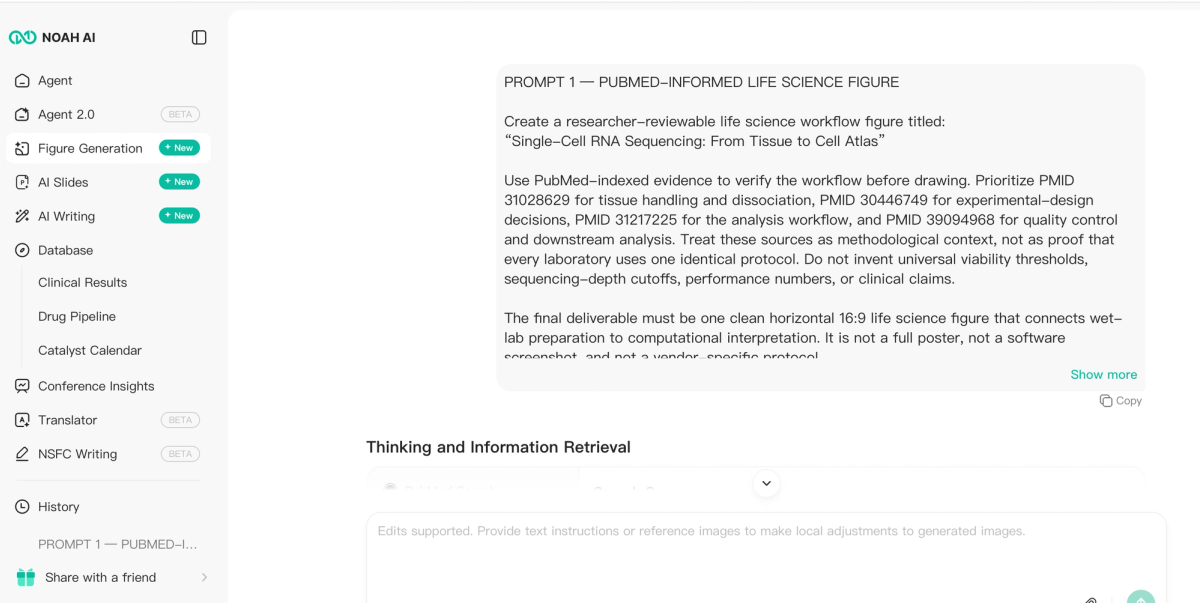
Figure 1. The real Prompt message in Noah. The image is cropped to the Prompt area, with the sidebar, account details, browser chrome, and mouse excluded.
Noah’s first output was scientifically strong. It connected the wet-lab and computational tracks, showed the requested seven stages, included sample and computational QC checkpoints, avoided vendor branding, and used concise visual modules rather than paragraphs.
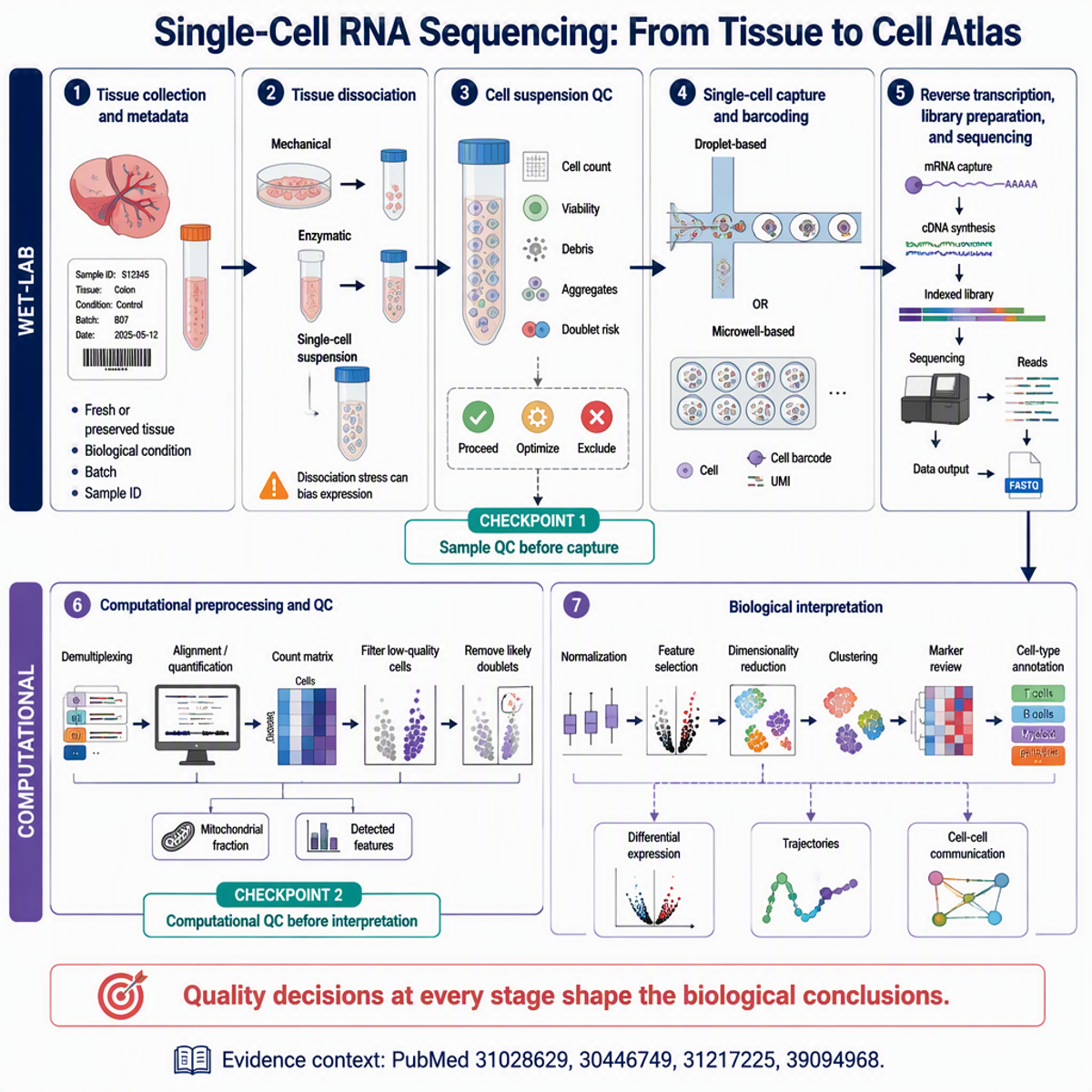
Figure 2. The first 1024 × 1024 output captured the scientific structure unusually well, but it ignored the requested 16:9 aspect ratio.
This first draft demonstrates why real output matters more than a workflow screenshot. Noah did not simply show that it had searched PubMed. It produced a concrete figure that a researcher could evaluate. The figure made important quality dependencies visible: dissociation stress before capture, suspension quality before barcoding, and computational filtering before interpretation.The main failure was equally concrete. Although the prompt required a true horizontal canvas, Noah returned a square image. For a presentation, report, or landscape manuscript panel, that is not a cosmetic detail; it changes how much content remains legible at final placement size.We therefore submitted a researcher-revision prompt that preserved the seven-stage structure but required a genuine 16:9 canvas, a compact upper wet-lab band, a lower computational band, and larger report-width labels.
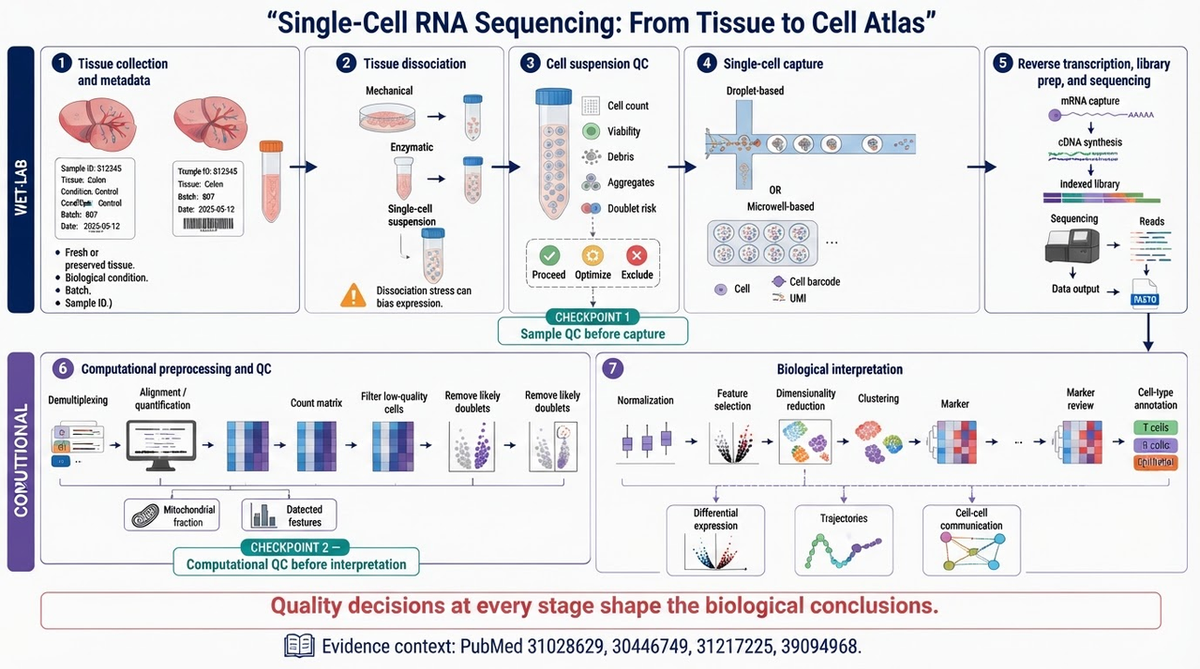
Figure 3. The revised output is a genuine 1376 × 768 horizontal figure. It preserves the evidence-informed structure but still contains small text defects and duplicated micro-panels that require cleanup.The revision fixed the largest usability problem. It transformed the square figure into a true 16:9 layout while retaining the title, stages, checkpoints, interpretation band, evidence footer, and overall visual language.
What the Noah case actually proves
- Research-to-structure translation. Noah transformed a long methods question into a visual sequence spanning tissue handling, molecular barcoding, sequencing, computational QC, and biological interpretation.
- Evidence-aware restraint. The output avoided fabricated universal QC thresholds and vendor-specific claims.
- Whole-figure revision. A natural-language request changed the aspect ratio and redistributed the full workflow without losing its main scientific logic.
- Earlier researcher review. The team can critique a concrete figure before investing time in manual vector reconstruction.
The case does not prove perfect in-image text, native object-level editing, or automatic publication readiness. Noah is valuable as a PubMed-to-first-draft bridge. The output still needs a scientist to verify the claims and a production pass when exact labels or vectors matter.
- BioRender: best for manual biomedical assembly
BioRender is a strong alternative when the scientific structure is already known and the main task is assembling editable biomedical assets. Its free plan currently allows up to three editable illustrations for educational use, while publication permissions and high-resolution watermark-free exports are associated with paid plans.BioRender is a better fit than Noah when the researcher wants direct object-level control from the beginning. Noah is more useful when the visual argument still needs to be derived from evidence. Teams can also combine them: generate and review the structure in Noah, then rebuild the accepted version on an editable scientific canvas.
- Mind the Graph: best for template-led scientific communication
Mind the Graph provides scientific illustrations and templates for graphical abstracts, infographics, posters, and presentations. Its official site describes more than 75,000 illustrations and over 300 templates across more than 80 fields.The free tier is useful for exploration and public presentation, but free outputs retain the Mind the Graph watermark and require attribution. It is a good choice when the scientific story is defined and a researcher wants to customize a ready-made communication format. It is less suited to retrieving literature and independently proposing the scientific structure.
- Bioicons plus draw.io: best open scientific asset workflow
Bioicons is an open collection of reusable scientific illustrations with item-level licenses. Its official site currently lists more than 2,800 icons and provides a draw.io integration. The extension page describes draw.io as free, registration-free, locally savable, privacy-preserving, and collaborative.This combination is compelling for teams that want no-cost scientific assets and a familiar diagram editor. The trade-off is manual labor. Researchers must decide the scientific hierarchy, choose every icon, build the arrows, manage attribution where required, and verify license compatibility.
- Canva: best for fast general layouts
Canva’s free infographic maker emphasizes templates, drag-and-drop layout, charts, AI media, and real-time collaboration. It works well for outreach graphics, educational explainers, social media, report pages, and slides.Canva is not inherently a life-science evidence engine. It can organize validated text beautifully, but a clean template does not guarantee that a pathway, experiment, or QC decision has been represented correctly. Use it when general communication and brand consistency are the priority.
- Inkscape: best free vector finishing
Inkscape is the strongest fully free option here for precise SVG editing. It is appropriate for correcting labels, aligning objects, rebuilding arrows, combining panels, and preparing a scalable final composition. Bioicons can also be imported into an Inkscape workflow.The limitation is speed at the beginning. Inkscape does not retrieve PubMed evidence or automatically propose the figure structure. It is most valuable after the scientific content is stable—or as the production stage following an AI-assisted draft.
Which free FigureLabs alternative should you choose?
Choose based on the unresolved bottleneck:
- Choose Noah AI when a biomedical or life science question must become a literature-informed first draft.
- Choose BioRender when the content is settled and you need manual biomedical assets and canvas control.
- Choose Mind the Graph when a template-led graphical abstract, poster, or infographic is the main deliverable.
- Choose Bioicons plus draw.io when open scientific assets and a no-cost browser diagram workflow matter.
- Choose Canva when general layout, collaboration, and fast communication are the priorities.
- Choose Inkscape when free vector precision and final cleanup matter most.
The strongest workflow may use two products. Generating the scientific structure and finishing exact vector artwork are different jobs.
Life science figure QA checklist
Before using an AI-assisted figure externally, verify:
- Does the figure answer one explicit scientific question?
- Are all stages, arrows, compartments, and labels scientifically defensible?
- Are cited papers being used as context rather than converted into unsupported certainty?
- Are sample handling and quality-control decisions shown where they affect interpretation?
- Are abbreviations, Greek letters, gene symbols, file formats, and units rendered correctly?
- Are any steps, icons, or labels duplicated?
- Is the figure readable at the actual report, poster, or slide size?
- Can the team edit the final labels and vectors if necessary?
- Do the plan and asset licenses permit the intended educational, publishing, or commercial use?
- Have the journal or institution’s AI-disclosure rules been checked?
- Has a domain expert reviewed the final image?
Frequently asked questions
Is Noah AI free?
Noah’s scientific figure page currently offers 20 free generations to try the workflow. Credit allowances and plan details can change, so confirm the current terms before starting a large figure project.
What is the best free FigureLabs alternative for life science figures?
Noah is the best free-to-try option in this comparison when the figure should begin with PubMed context or a biomedical research question. Bioicons with draw.io or Inkscape is the stronger fully open workflow when manual assembly and vector editing are acceptable.
Is FigureLabs itself free?
FigureLabs currently advertises 200 free credits and no credit card requirement. Credits are not the same as unlimited free usage, and export or publishing needs should be checked against the current plan and terms.
Can AI-generated scientific figures be published directly?
Do not assume so. Verify the scientific content, correct every label, check the product and asset licenses, and follow the journal or institution’s disclosure policy. Conceptual illustrations must never be presented as raw experimental data.
Final takeaway
The closest-looking FigureLabs alternative is not automatically the best product for a life science figure. The better question is which part of the work remains difficult: interpreting evidence, generating the first visual structure, assembling scientific assets, collaborating on general layout, or finishing precise vector artwork.The Noah single-cell RNA-seq case demonstrates a meaningful product advantage. Noah can turn a PubMed-framed methods question into a connected wet-lab and computational workflow, expose a real aspect-ratio failure for review, and respond to natural-language revision without discarding the scientific structure. For researchers who otherwise move manually from papers to notes to a blank canvas, that research-to-figure bridge is more valuable than another generic image generator
Try Noah AI for Free Use Noah AI to search, compare, and analyze biomedical evidence with AI-powered research workflows.
Free credits are available, and no credit card is required to get started.