How to Build a Drug Sales Forecast with Noah AI
Linda
Learn how Noah AI helps biopharma teams build drug sales forecast frameworks using patient population, adoption, pricing, access, competition, and scenarios.
Introduction
Drug sales forecasting is a core workflow for commercial, strategy, BD, market research, and investor teams in biopharma. A useful forecast is not only a revenue number. It depends on patient population, diagnosis rate, treatment eligibility, adoption assumptions, pricing logic, reimbursement access, competitive pressure, and scenario planning.
The challenge is that these assumptions are often scattered across epidemiology sources, clinical evidence, product labels, market reports, company updates, payer context, and expert judgment. Teams need a way to organize assumptions clearly before they build or refine a financial model.
Noah AI helps teams create a structured drug sales forecast framework by organizing the product, indication, market assumptions, adoption drivers, pricing considerations, competitive risks, and scenario logic into a reviewable commercial brief. The output is not a final financial forecast. Instead, it is a structured starting point that teams can validate, adjust, and use for internal discussion.
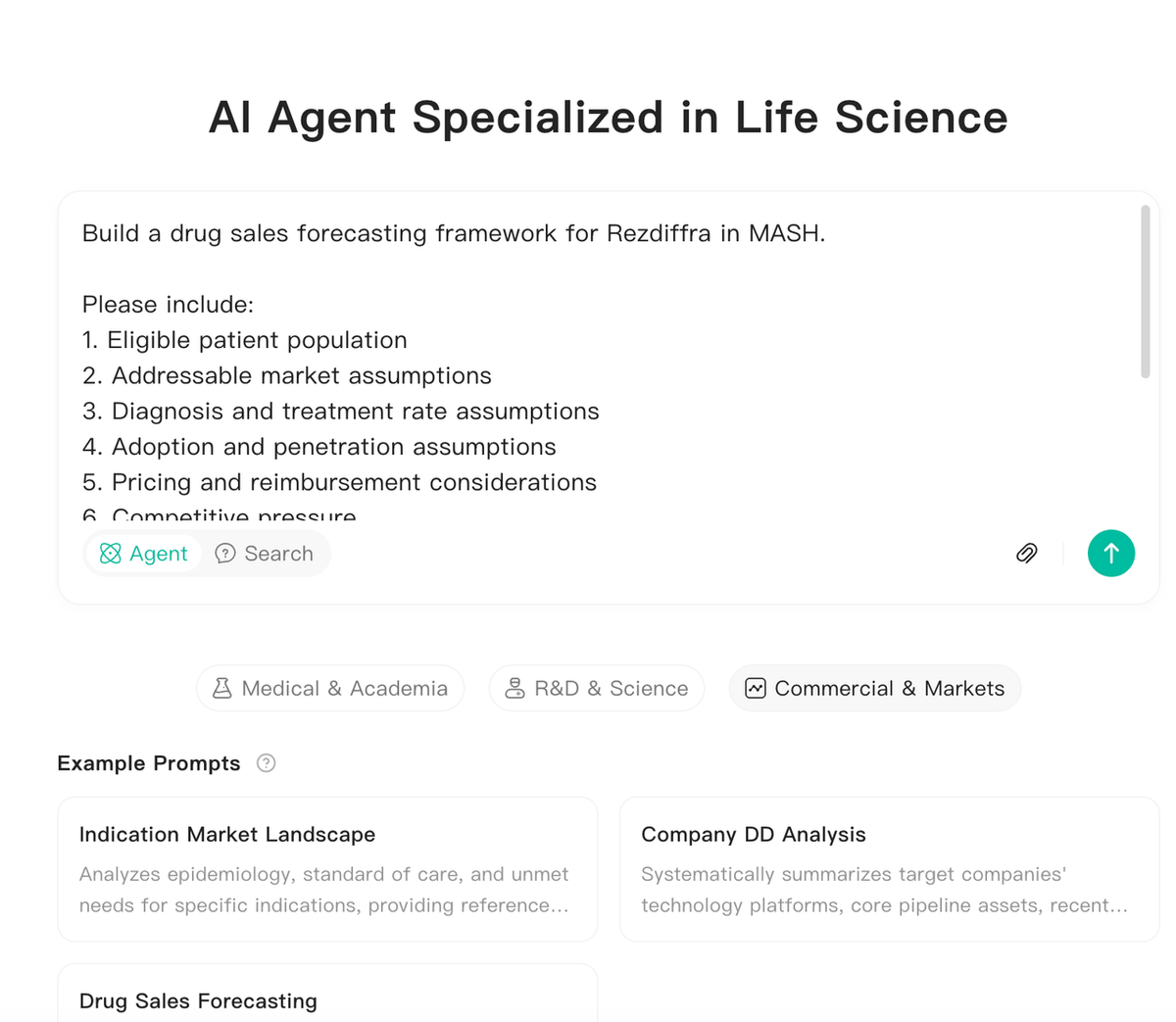
Figure 1. Users can start a drug sales forecast in Noah AI by defining the product, indication, patient population, adoption assumptions, pricing considerations, scenarios, and evidence requirements.
Why Drug Sales Forecasting Is Difficult
Drug sales forecasting is difficult because each forecast depends on multiple assumptions that can change over time. A forecast may start with disease prevalence, but it cannot stop there. Teams also need to understand how many patients are diagnosed, how many are eligible for treatment, how many are managed by relevant specialists, how quickly physicians may adopt the therapy, and how access or reimbursement may affect uptake.
For specialty therapies, the challenge is even sharper. The addressable market may be much smaller than the total disease population, and early sales performance may reflect diagnosis pathways, referral patterns, payer access, launch sequencing, and competitive dynamics. A simple prevalence multiplied by price model can miss these gating factors.
A strong forecast therefore needs a transparent assumption structure. Commercial teams need to know which inputs are evidence-backed, which are assumptions, and which require validation through market research, payer feedback, or expert review.
What Should a Drug Sales Forecast Include?
A useful drug sales forecast should include more than top-line revenue estimates. For internal commercial strategy, the framework should usually cover:
- · Disease and indication context
- · Eligible patient population and addressable market assumptions
- · Diagnosis rate, treatment rate, and specialist-managed patient pools
- · Adoption and penetration assumptions by year
- · Pricing, access, reimbursement, and payer considerations
- · Competitive pressure and future market changes
- · Base, upside, and downside scenarios
- · Key risks, evidence gaps, and assumptions that require validation
How Noah AI Supports Drug Sales Forecasting
Noah AI is useful because drug sales forecasting starts from a structured commercial research workflow, not a blank spreadsheet. Users can define the product, indication, patient population, forecast scope, and scenario requirements, then use Noah AI to organize the forecast logic into a review-ready commercial brief.
In the example workflow, the user asks Noah AI to build a drug sales forecasting framework for Rezdiffra in MASH. Instead of asking for a single number, the prompt requests eligible patient population, addressable market assumptions, diagnosis and treatment rate assumptions, adoption and penetration assumptions, pricing and reimbursement considerations, competitive pressure, base/upside/downside scenarios, key forecast drivers, major risks, and traceable references.
This makes the output more useful for commercial teams because the forecast can be reviewed as a structured set of assumptions rather than treated as an unsupported prediction.
Step 1: Define the Product, Indication, and Forecast Scope
The first step is to define the product and indication clearly. A forecast for a broad disease market will be too vague unless the user specifies the product, eligible patient population, geography, time horizon, treatment setting, and key commercial assumptions.
For example, a user can ask Noah AI to build a sales forecasting framework for Rezdiffra in MASH and request a structured output across patient population, adoption, pricing, competition, scenarios, and risks. This gives Noah AI a clear commercial scope and helps avoid a generic market summary.
Step 2: Organize Patient Population and Market Assumptions
After the forecast scope is defined, the next step is to organize market size logic. For a patient-based forecast, teams often need to separate the total disease population from the commercially addressable population and the actual treated population. This distinction matters because not every diagnosed patient is eligible, referred, covered, or treated.
Noah AI can help structure these layers into a reviewable framework. In the example output, Noah AI frames the forecast around nested population pools, including a biologically eligible pool, a diagnosed or specialist-managed pool, and a treated product pool. This is more useful than jumping directly to a revenue number because it reveals which assumptions are driving the forecast.
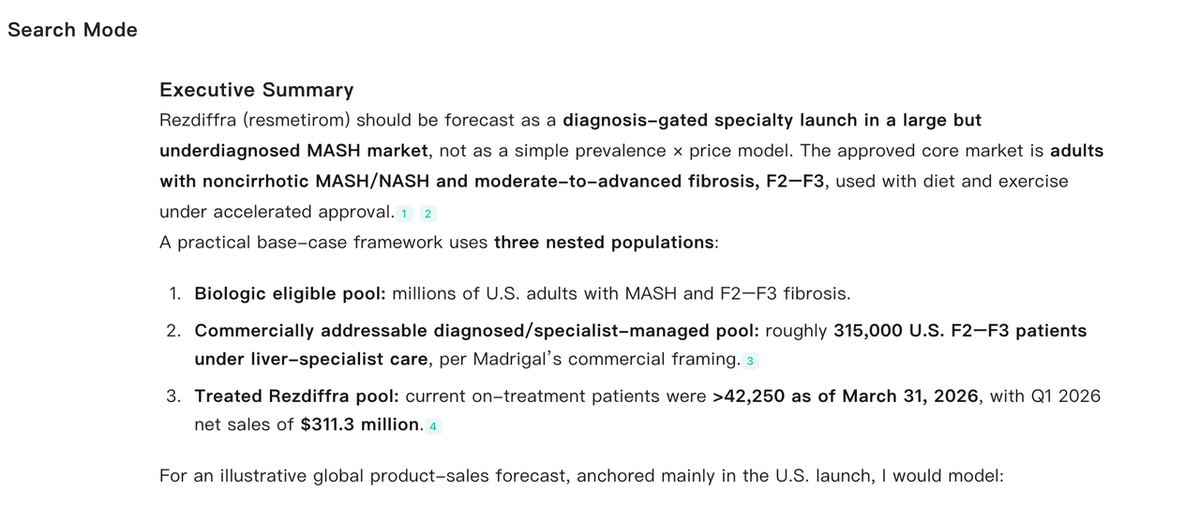
Figure 2. Noah AI generates an executive summary that frames Rezdiffra as a diagnosis-gated specialty launch and organizes the forecast around eligible, addressable, and treated patient populations.
Step 3: Build Base, Upside, and Downside Scenarios
A forecast should not rely on one scenario. Commercial and strategy teams usually need a base case, upside case, and downside case to understand how changes in adoption, access, competition, or market expansion could affect future revenue. Scenario planning helps teams discuss uncertainty rather than hide it.
Noah AI can help organize scenario logic by year and by forecast case. The example scenario table shows base, upside, and downside cases across future years. For internal use, teams should treat this type of output as illustrative and review the assumptions behind each case before using it in financial modeling.
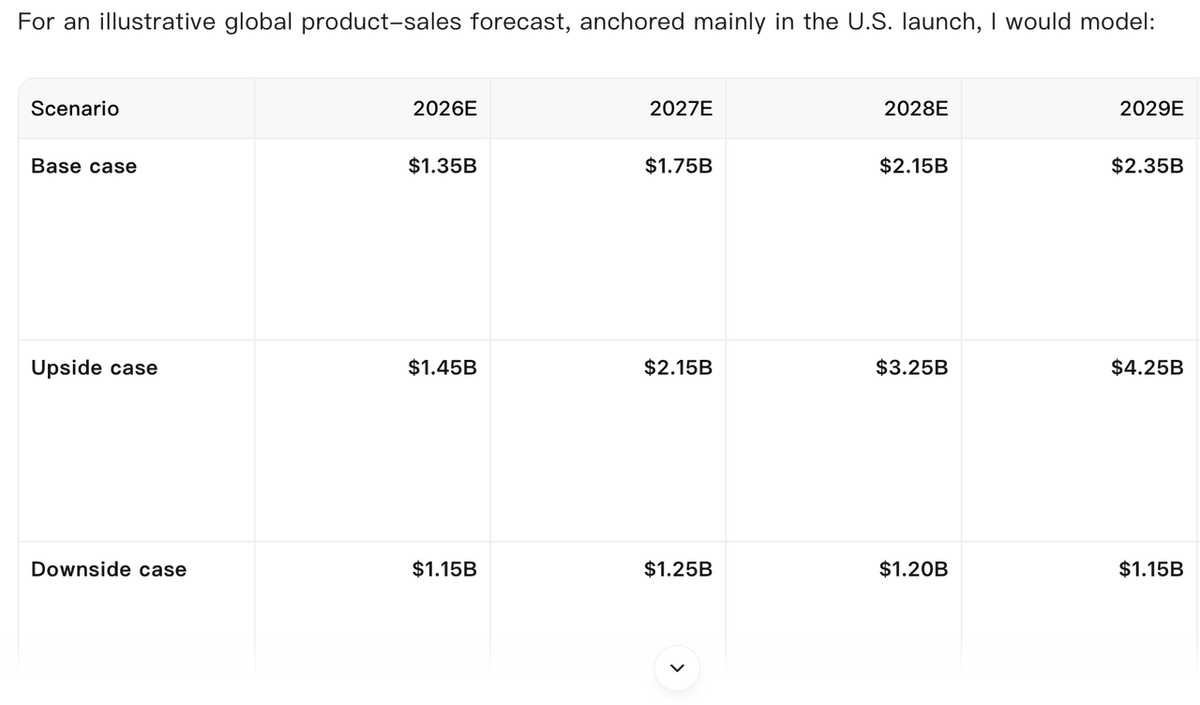
Figure 3. Noah AI can organize drug sales forecast logic into base, upside, and downside scenarios, helping teams review revenue assumptions across future years.
Drug Sales Forecast Drivers and How Noah AI Supports Them
| Forecast Driver | Why It Matters | How Noah AI Helps |
|---|---|---|
| Patient population | Defines the eligible market | Organizes prevalence, diagnosis, and eligibility assumptions |
| Adoption rate | Drives treatment uptake | Structures base, upside, and downside scenarios |
| Pricing and access | Shapes revenue potential | Documents pricing, reimbursement, and access considerations |
| Competition | Affects market share | Highlights competing products and pressure points |
When Should Commercial Teams Use Noah AI for Forecasting?
Commercial and strategy teams can use Noah AI when they need to prepare a forecast framework before building a detailed spreadsheet model. It is especially useful for early market sizing, product launch planning, BD opportunity review, investor research, competitive scenario planning, and internal strategy discussions.
Noah AI is also useful when teams need to turn scattered market evidence into a structured brief. Instead of collecting sources and assumptions manually across many documents, users can ask Noah AI to organize the forecast logic and identify the key assumptions that require expert validation.
Final Takeaway
Drug sales forecasting is not just about estimating a future revenue number. It requires a clear view of patient population, diagnosis and treatment pathways, adoption assumptions, pricing and access, competitive pressure, and scenario logic.
Noah AI helps biopharma teams build a structured forecast framework that is easier to review, challenge, and refine. By turning commercial assumptions into a traceable, organized brief, Noah AI gives teams a stronger starting point for strategy discussion and expert validation.
Ready to build a reviewable drug sales forecast framework? Try Noah AI.
FAQ
What is a drug sales forecast?
A drug sales forecast is an estimate of future product revenue based on patient population, treatment eligibility, adoption rate, pricing, reimbursement, competition, and market access assumptions.
How does Noah AI help build a drug sales forecast?
Noah AI helps users organize forecast assumptions, including eligible patient population, adoption drivers, pricing considerations, competitive pressure, scenarios, and risks, into a structured commercial brief.
Can Noah AI create a final revenue model?
Noah AI can help structure forecast logic and assumptions, but final revenue models should be built, validated, and reviewed by commercial, finance, market access, and strategy experts.
Who can use Noah AI for drug sales forecasting?
Commercial teams, market research teams, BD teams, pharma strategy teams, investors, and biopharma analysts can use Noah AI to support forecast preparation.
Can Noah AI compare forecast scenarios?
Yes. Noah AI can help structure base, upside, and downside scenarios by organizing assumptions around patient population, adoption, pricing, competition, and access.
Research and Commercial Disclaimer
This article is for research workflow education only. Noah AI can help organize information and forecast assumptions, but it should not be treated as a replacement for commercial, finance, market access, regulatory, legal, medical, or strategy expert review. Any forecast output should be validated against original sources, internal assumptions, financial models, payer feedback, and expert judgment before being used for formal business decisions.