How to Prepare a Biotech Company Due Diligence Report with Noah AI
Linda
Learn how Noah AI helps biopharma, BD, and investment teams prepare biotech company due diligence reports by analyzing company background, technology platforms, pipeline assets, clinical progress, partnerships, risks, and strategic implications.
Biotech company due diligence is a common workflow for biopharma business development, investment research, competitive intelligence, and strategy teams. Before evaluating a potential partnership, licensing opportunity, acquisition target, or investment thesis, teams need to understand much more than a company homepage. They need to review the company focus, technology platform, pipeline assets, clinical development status, competitive position, partnerships, financing signals, and major risks.The challenge is that company due diligence information is often fragmented across company websites, clinical trial records, publications, investor presentations, regulatory updates, press releases, and market intelligence sources. A simple company summary is rarely enough for serious biopharma research.Noah AI helps teams prepare structured biotech company due diligence reports by combining professional research workflows with biopharma-specific analysis. Users can define the company and research scope, then use Noah AI to organize company background, platform details, pipeline programs, evidence signals, risks, and strategic implications into a report-ready format.
Why Biotech Company Due Diligence Is Difficult
Biotech company due diligence is difficult because the value of a company is rarely explained by one data point. A company may look attractive because of a lead asset, but the full picture depends on the strength of the platform, quality of clinical evidence, development risk, regulatory pathway, competitive pressure, commercial potential, and execution capability.For BD and investment teams, the problem is not only collecting information. The harder task is connecting scattered company, pipeline, clinical, and market signals into a structured view that supports decision-making. Teams need to understand what is known, what remains uncertain, and what should be reviewed by scientific, clinical, legal, financial, and regulatory experts.This is where a dedicated biopharma research workflow matters. Noah AI can help teams move from broad company questions to organized diligence sections, making the first draft easier to review and refine.
What Should a Biotech Company Due Diligence Report Include?
A useful biotech company due diligence report should go beyond a company description. It should help teams evaluate whether a company is scientifically credible, strategically relevant, and commercially meaningful. Depending on the use case, the report may include:
- Company background and business focus
- Technology platform and scientific rationale
- Core pipeline assets and therapeutic areas
- Clinical development status and key evidence signals
- Partnerships, financing, or business development signals
- Competitive landscape and differentiation
- Major scientific, clinical, regulatory, commercial, and execution risks
- Strategic implications for BD, investment, or internal review
The goal is not to replace formal due diligence. The goal is to create a structured research draft that helps teams identify what matters and where expert review is needed.
How Noah AI Supports Company Due Diligence Workflows
Noah AI is useful because company due diligence starts from a structured biopharma research workflow, not a generic prompt. Users can ask Noah AI to analyze a company background, pipeline assets, clinical development status, technology platform, partnerships, and strategic risks in one connected report.For example, a team can use Noah AI to prepare a due diligence report on Madrigal Pharmaceuticals, with sections covering the company background, technology platform, core assets, therapeutic areas, clinical evidence, business signals, competitive landscape, risks, and strategic implications.
Step 1: Define the Company and Research Scope
The first step is to define the company and the scope of analysis. A clear prompt helps Noah AI understand whether the user needs a scientific review, BD screening memo, investment research draft, or strategic company overview.
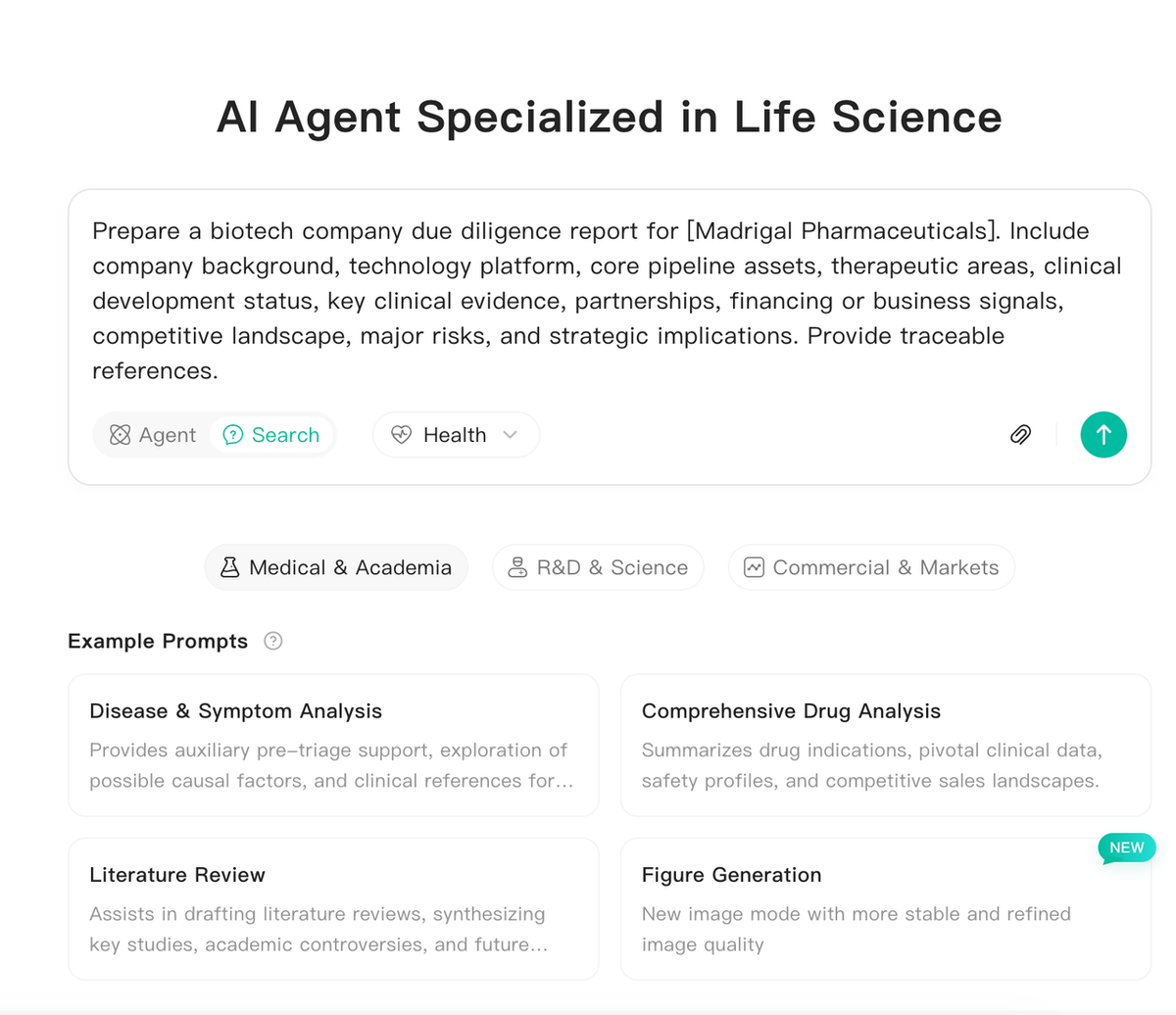
Figure 1. Users can start a biotech company due diligence report in Noah AI by defining the company, analysis scope, pipeline focus, risk areas, and required report sections.
Step 2: Review Company Background, Platform, Pipeline, and Risks
After the research scope is defined, Noah AI can generate a structured due diligence summary. The output can help teams understand the company thesis, commercial signals, pipeline concentration, platform direction, and key risks that should be reviewed in more depth.In the example below, Noah AI organizes the due diligence output around Madrigal Pharmaceuticals, its lead product Rezdiffra, commercial trajectory, strategic thesis, and core risk areas. This kind of executive summary can serve as a starting point for BD, investment, or strategy discussions.
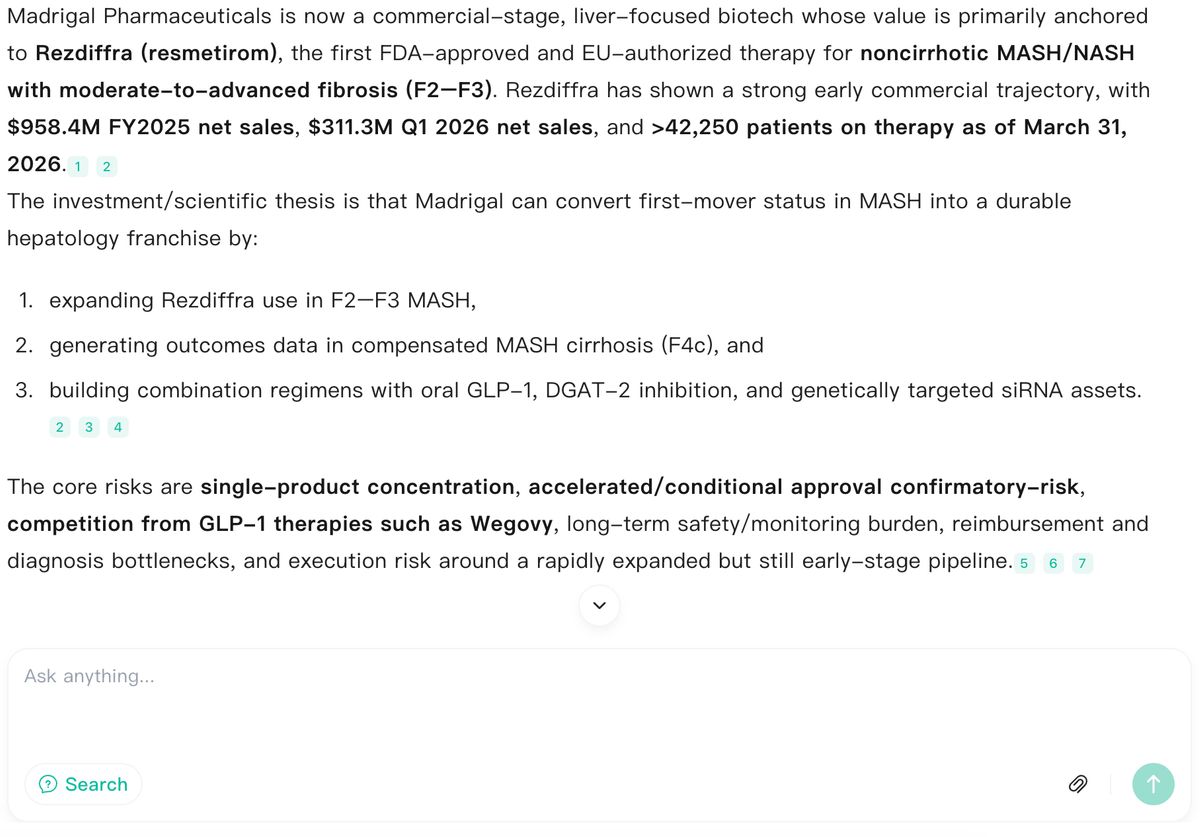
Figure 2. Noah AI can organize biotech company information into a structured due diligence summary covering commercial status, pipeline thesis, key risks, and strategic implications.
Step 3: Identify Risks, Gaps, and Strategic Implications
A strong company due diligence workflow should not only summarize positives. It should also surface risks and open questions. For biotech companies, these may include single-product dependence, confirmatory trial risk, reimbursement uncertainty, competitive pressure, regulatory obligations, safety monitoring burden, platform validation gaps, or commercial execution challenges.Noah AI can help turn these issues into structured review points. Teams can then decide which questions require follow-up with scientific, clinical, legal, financial, or regulatory experts. This makes the output more useful as a diligence starting point rather than a final decision document.
Biotech Company Due Diligence Areas and How Noah AI Supports Them
| DD Area | What Teams Need to Review | How Noah AI Helps |
|---|---|---|
| Company profile | Business focus, therapeutic area, leadership signals | Summarizes company background and positioning |
| Pipeline assets | Drugs, stages, indications, mechanisms | Organizes key pipeline programs |
| Technology platform | Scientific rationale and differentiation | Explains platform value and evidence gaps |
| Risk assessment | Clinical, regulatory, competitive, and business risks | Highlights issues for expert review |
Common Use Cases for Biopharma Teams
Business Development Screening
BD teams can use Noah AI to prepare an initial company review before deeper diligence. The output can help identify whether a company is worth further evaluation and which questions need follow-up.
Investment Research
Investment researchers can use Noah AI to organize the scientific thesis, commercial signals, pipeline exposure, and risk factors behind a biotech company.
Competitive Intelligence
Competitive intelligence teams can use company due diligence reports to compare platforms, pipeline strategies, and development focus across companies in the same therapeutic area.
Strategy and Portfolio Review
Strategy teams can use Noah AI to understand how a company fits within a broader therapeutic area, platform trend, or partnership opportunity landscape.
When Should Teams Use Noah AI for Company Due Diligence?
Noah AI is especially useful when teams need to:
- Prepare an initial biotech company due diligence draft
- Review company background, pipeline assets, and platform focus
- Summarize clinical development status and evidence signals
- Identify risks, gaps, and follow-up questions
- Prepare BD, investment, or strategic review materials
- Turn scattered company information into a structured research workflow
Noah AI should not replace formal due diligence. It helps create a structured research starting point that can be validated and refined by qualified experts.
Final Takeaway
Biotech company due diligence requires more than a quick company summary. Teams need to understand the company background, platform, pipeline assets, clinical progress, business signals, competitive context, risks, and strategic implications.Noah AI helps biopharma teams turn scattered company, platform, pipeline, and clinical signals into a structured due diligence report. For BD, investment research, competitive intelligence, and strategy teams, this can shorten the path from company research to a review-ready diligence draft.Ready to prepare biotech company due diligence reports with Noah AI? Try Noah AI.
FAQ
What is a biotech company due diligence report?
A biotech company due diligence report is a structured analysis of a company business focus, technology platform, pipeline assets, clinical development status, partnerships, risks, and strategic value.
How does Noah AI help with biotech company due diligence?
Noah AI helps users organize company background, platform information, pipeline assets, clinical evidence, competitive context, and risk factors into a structured report.
Who can use Noah AI for company due diligence?
Biopharma BD teams, investment researchers, competitive intelligence teams, strategy teams, consultants, and pharma market research teams can use Noah AI to support company due diligence workflows.
Can Noah AI prepare a company due diligence memo?
Yes. Noah AI can help generate a structured draft that includes company overview, platform analysis, pipeline assets, risk areas, and strategic implications. The draft should be reviewed by qualified experts before formal use.
Can Noah AI replace legal, financial, or scientific due diligence?
No. Noah AI helps create a structured research draft, but formal due diligence should always involve qualified legal, financial, scientific, clinical, and regulatory experts.
Research and Compliance Disclaimer
This article is for research workflow education only. AI-generated company due diligence summaries should not be used as legal, financial, clinical, regulatory, investment, or business decision-making advice without review by qualified professionals.Users should verify company information, clinical evidence, pipeline records, financial data, regulatory status, and strategic interpretation before using any output in formal reports, external communications, investment decisions, or business decisions.