
Best BioRender Alternatives for PubMed-Informed Scientific Figures (2026)
Linda
Compare the best BioRender alternatives for PubMed-informed scientific figures, including a real Noah AI cGAS-STING case with sources and revisions.
If your figure must be informed by PubMed—not merely decorated with citations—the best BioRender alternative depends on where you want evidence work to happen. Noah AI is the strongest all-in-one option in this comparison for turning a PubMed-grounded request into an editable scientific figure draft. Mind the Graph is better for researchers who already know the science and want a large illustration library. Elicit and SciSpace are stronger upstream research tools, but they still require a separate figure editor. Bioicons with draw.io is the most practical free manual stack, while Inkscape remains the best choice for final vector polishing.This distinction matters. A visually polished pathway diagram can still overstate causality, merge evidence from incompatible contexts, or imply that a preclinical mechanism is a universal clinical result. The real deliverable is not “an AI image.” It is a researcher-reviewable figure in which each important visual element can be traced back to evidence and corrected before publication.Disclosure: Noah AI is our product. We therefore tested Noah with a real PubMed-grounded mechanism case and report the errors as well as the useful output. Competitor positioning is based on publicly available product information rather than full hands-on testing of every tool.
Quick comparison
| Tool | Best for | PubMed or literature work | Figure creation | Main limitation |
|---|---|---|---|---|
| Noah AI | Moving from evidence request to a first figure draft in one workspace | Retrieves PubMed records and surfaces cited sources | AI-generates and revises scientific figures | Generated labels and layout still require expert review |
| Mind the Graph | Manual scientific design with a large asset library | Evidence review happens outside the canvas | Templates, icons, and manual/AI-assisted composition | Source-to-element traceability is not the core workflow |
| Elicit + figure editor | Structured literature search, screening, and extraction | Strong evidence synthesis with sentence-level citations | Use another tool for the diagram | Two-tool workflow; visual mapping is manual |
| SciSpace + figure editor | Reading and comparing papers and PDFs | Strong paper discovery and PDF analysis | Use another tool for the diagram | Does not turn the evidence map into a finished mechanism figure |
| Bioicons + draw.io | Free, private, manually controlled figures | Research is performed separately | Open biological icons plus diagram assembly | Time-intensive; no automated evidence retrieval |
| Inkscape | Publication-grade vector cleanup | No literature retrieval | Precise vector editing and export | Steepest manual workload in this list |
What “PubMed-informed” should mean
The phrase should describe a workflow, not a visual style. At minimum, a PubMed-informed scientific figure should meet four conditions:
- Evidence comes before drawing. The tool or researcher first identifies relevant PubMed-indexed records, rather than searching for citations after the image is finished.
- Sources support specific visual elements. A citation should be associated with a molecule, interaction, cell type, compartment, or qualified outcome—not attached vaguely to the whole figure.
- Context is preserved. Cell type, experimental system, timing, and evidence level should constrain what the figure claims.
- A researcher can review and revise the output. PubMed indexing does not make every interpretation correct, and generative models can introduce label errors even when the underlying sources are sound.
A tool can therefore be excellent for literature analysis without being a scientific figure generator. It can also be excellent for drawing without helping the user establish an evidence map. The best choice depends on which gap you need to close.
How we evaluated the alternatives
We used six criteria aligned with the final deliverable:
- PubMed intake: Can the workflow retrieve or work directly from PubMed-indexed evidence?
- Source-to-element mapping: Can the user connect evidence to individual figure components?
- Scientific figure generation: Does the product create a coherent visual draft, not just a text summary?
- Revision: Can a researcher correct claims, labels, structure, and visual hierarchy?
- Reviewability: Are sources, assumptions, and limitations visible enough to audit?
- Production readiness: Can the result move into an editorial or publication workflow without rebuilding everything from scratch?
Noah AI: best all-in-one PubMed-to-figure workflow
Noah AI Figure Generation combines literature retrieval, cited reasoning, figure generation, and natural-language revision. That makes it the clearest alternative here when the starting point is a biomedical question and the desired endpoint is a visual draft. Noah states that Figure Generation can work from text or reference images and retrieve PubMed evidence with cited references.The useful product advantage is not simply that Noah can draw. It is that evidence retrieval and visual production happen in the same task, so a user can inspect which papers informed the pathway and then correct the figure in context.
Real test: cGAS–STING signaling to antitumor T-cell priming
We asked Noah to create a 16:9 mechanism figure titled “From Cytosolic DNA Sensing to Antitumor T-Cell Priming.” The prompt specified five stages and named three PubMed records:
- PMID 23258413, the foundational cGAS discovery paper;
- PMID 38919400, a review of cGAS–STING in antitumor immunity;
- PMID 38363830, a study of STING licensing in type I dendritic cells.
The prompt also imposed a strict claim boundary: show the canonical pathway and dendritic-cell/T-cell priming sequence, but do not add doses, response rates, tumor regression, approved-treatment claims, or a universal clinical-efficacy conclusion.
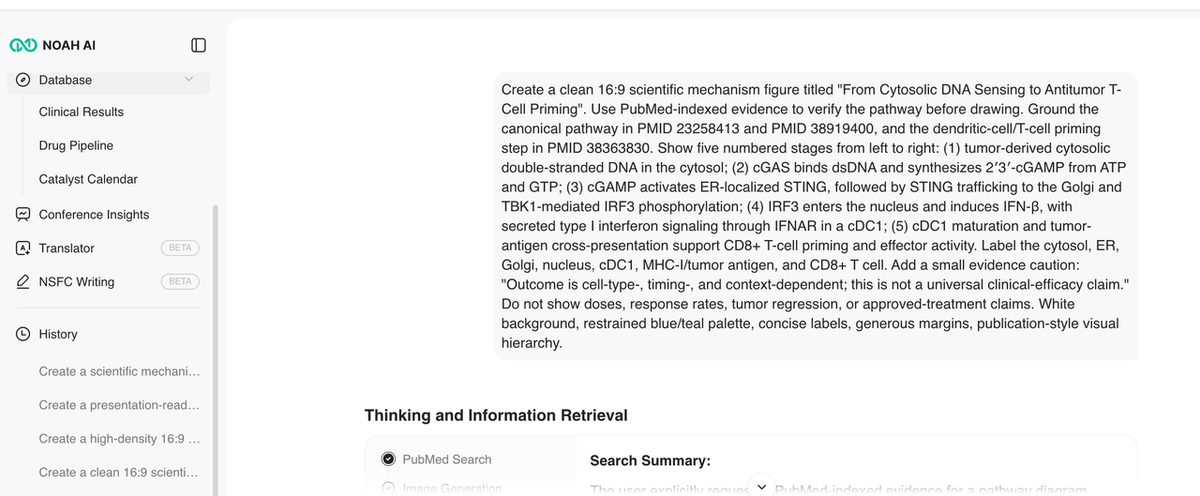
Figure 1. Noah retrieved the requested PubMed records before generating the figure. Noah returned a search summary, used the exact PMID query, and generated a five-stage figure plus a cited explanation. This is more useful than a generic “make a pathway diagram” response because the pathway request, source set, and output remain connected.
The first draft was useful—but not publication-ready
The first output correctly captured the broad sequence: tumor-derived cytosolic double-stranded DNA, cGAS and 2′3′-cGAMP, STING trafficking and TBK1/IRF3 signaling, type I interferon, cDC1 cross-presentation, and CD8+ T-cell priming.It also contained visible production errors. “ATP + GTP” appeared twice, a Granzyme label was broken, organelle labels were duplicated, and the evidence footer was repeated. Those are not cosmetic details in a scientific figure: duplicated labels can imply duplicated biological events, and an ambiguous compartment can change the interpretation of a pathway.We therefore submitted a human-review revision that explicitly required one ER, one Golgi, and one nucleus; clarified that the central signaling cell should be a cDC1; labeled DNA transfer as context-dependent; and removed the duplicated and broken text.
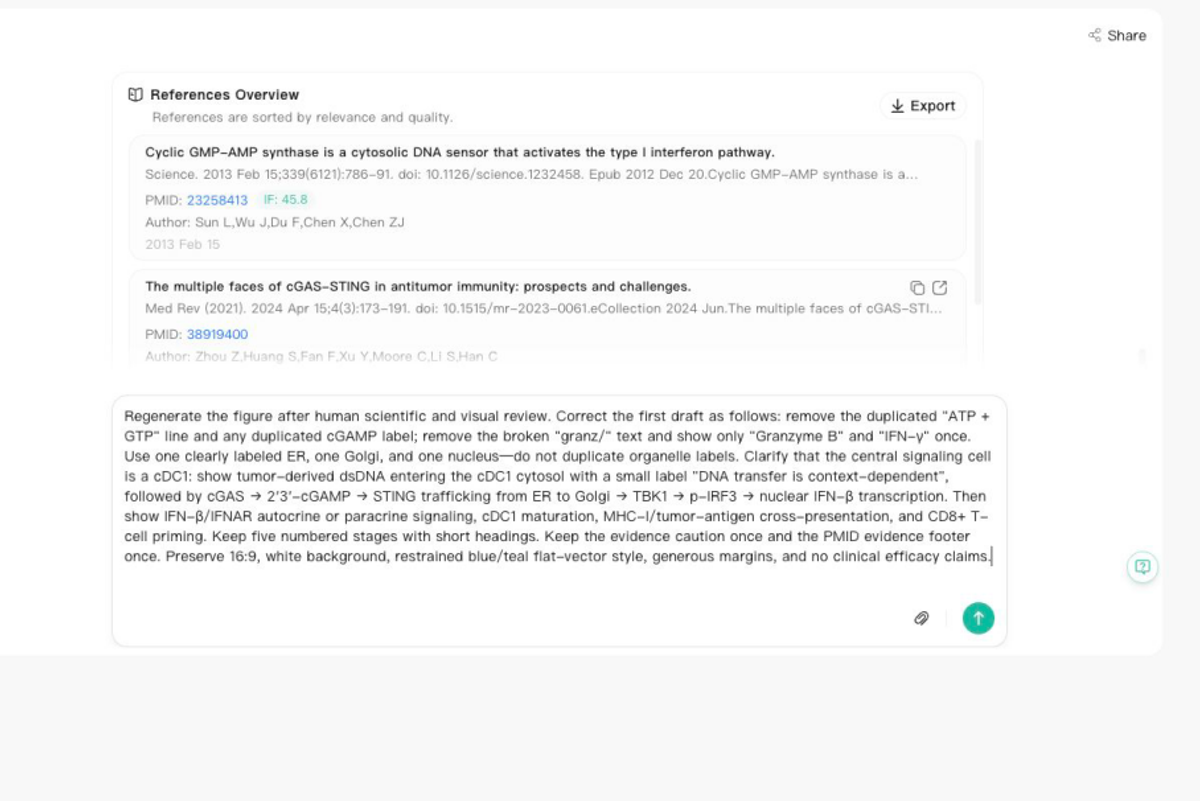
Figure 2. The researcher-review step connects source inspection with concrete visual corrections rather than treating generation as the end of the workflow.
The revised output improved the reaction labeling and removed the broken Granzyme text. It preserved the five-stage structure and the caution that the outcome is cell-type-, timing-, and context-dependent. We selected this revision as the case deliverable.
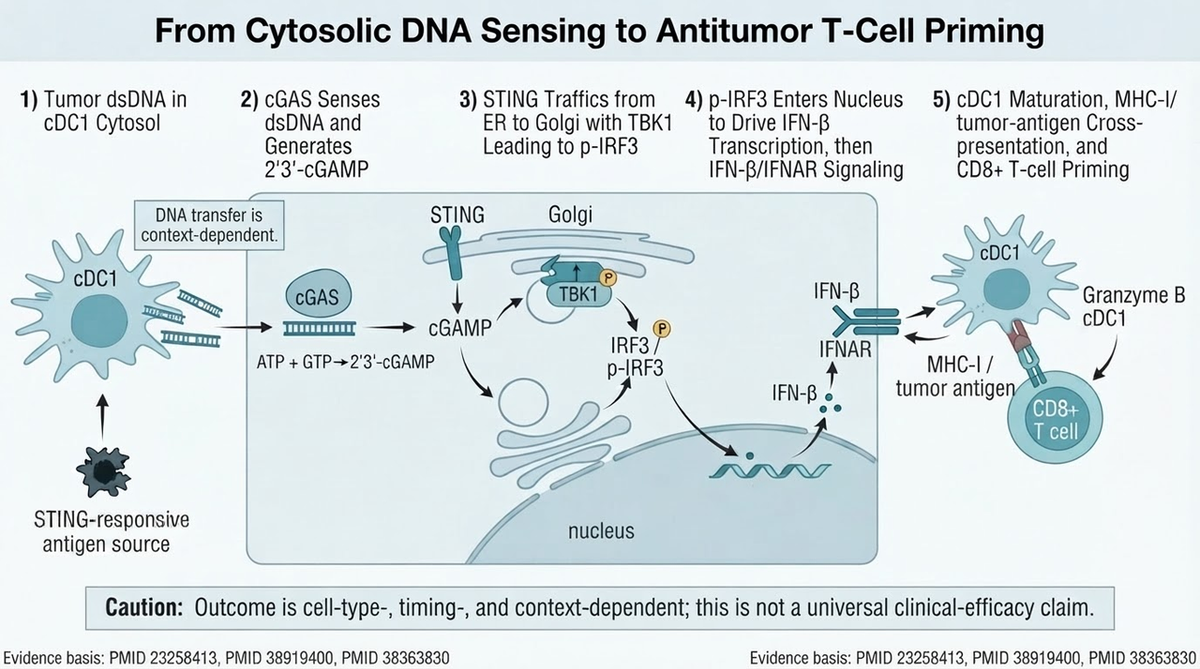
Figure 3. Selected revised output from the Noah test. The case supports four concrete Noah advantages:
- Noah can retrieve exact PubMed records named in a figure request.
- It can translate an evidence-bounded mechanism specification into a structured visual draft.
- It provides a cited explanation that helps reviewers connect sources to visual elements.
- It accepts detailed scientific and visual corrections in natural language.
Choose Noah if: you want PubMed retrieval, cited reasoning, initial figure generation, and iteration in one place—and you have a domain expert available to review the output.
Mind the Graph: best for asset-rich manual scientific design
Mind the Graph is a closer visual-design competitor to BioRender. Its value is a large library of scientific illustrations, templates, and a canvas designed for research communication. It is a good fit when the evidence has already been reviewed and the main task is turning a known mechanism or workflow into a polished diagram.For a PubMed-informed project, the researcher would normally build the evidence map elsewhere, then use Mind the Graph to assemble the figure. That separation can be an advantage for teams with formal review processes because the evidence document and the design file remain distinct. It is less efficient when the user wants a single prompt to drive both evidence retrieval and figure creation.Choose Mind the Graph if: your team already has an approved figure specification and values a deep scientific asset library and manual visual control.
Elicit plus a figure editor: best for structured evidence synthesis
Elicit is strongest upstream of the canvas. It helps researchers search, screen, extract data, and synthesize literature with sentence-level citations. For a complex figure—especially one combining multiple studies—this can produce a better evidence table than starting directly in a drawing tool.A practical workflow is to create one row per proposed visual claim: figure element, supporting paper, population or model, experimental context, evidence level, and caveat. The approved rows then become the specification for BioRender, Mind the Graph, Illustrator, or another editor.The tradeoff is handoff friction. The source-to-element map does not automatically become a diagram, so the researcher or designer must manually preserve qualifiers during visual translation.Choose Elicit plus an editor if: rigorous literature screening and structured extraction matter more than generating the first visual draft quickly.
SciSpace plus a figure editor: best for reading and comparing PDFs
SciSpace is useful when the bottleneck is understanding papers. Its literature-review workspace and PDF tools help users discover articles, interrogate documents, and compare sources. That makes it suitable for building a figure brief from dense methods, results, and supplementary material.Like Elicit, SciSpace is not primarily a publication figure canvas. The user still needs to decide which findings become visual elements and then recreate them in another tool. This is a sensible division of labor for evidence-heavy reviews, but it is not an all-in-one PubMed-to-figure experience.Choose SciSpace plus an editor if: your team spends more time interpreting PDFs than drawing and wants a strong reading workspace before design begins.
Bioicons plus draw.io: best free manual workflow
Bioicons provides reusable biological icons and extensions, while draw.io offers a familiar diagramming canvas. Together they form a capable zero-cost workflow for researchers who want explicit manual control and do not need automated literature retrieval.This stack can also be attractive for privacy-sensitive work because the figure can be assembled locally. The cost is researcher time: users must retrieve evidence, create the source map, choose icons, manage consistency, and maintain labels themselves. Licensing should be checked at the individual icon level before publication.Choose Bioicons plus draw.io if: budget, local control, and transparent manual construction matter more than speed.
Inkscape: best for final vector polish
Inkscape is a free, open-source vector editor rather than a literature tool. It is ideal for refining line weights, typography, spacing, panels, and export settings after the scientific content has been approved.For PubMed-informed figures, Inkscape belongs at the end of the workflow. It will not retrieve papers or warn that a mechanistic arrow lacks support, but it gives experienced users precise control over the final artifact.Choose Inkscape if: you already have an evidence-approved draft and need publication-grade vector cleanup without a subscription.
Which workflow should you choose?
- Choose Noah AI when you want the shortest path from a PubMed-grounded request to a reviewable figure draft.
- Choose Mind the Graph when the science is settled and manual scientific illustration is the main job.
- Choose Elicit when systematic evidence extraction is the priority and a separate design step is acceptable.
- Choose SciSpace when paper and PDF interpretation is the bottleneck.
- Choose Bioicons plus draw.io when you want a free, manually controlled workflow.
- Choose Inkscape when the remaining task is precise vector finishing.
Many teams will use more than one. A rigorous high-control pipeline might use Elicit or SciSpace for evidence review, Noah for a first mechanism draft, and Inkscape for final production. The key is to preserve the source-to-element map through every handoff.
A publication QA checklist for PubMed-informed figures
Before a figure leaves internal review, verify:
- Every causal arrow is supported by the cited study type and experimental context.
- Cell types, species, tissues, and compartments are named consistently.
- Review articles are not presented as if they were primary experiments.
- Preclinical mechanisms are not converted into clinical efficacy claims.
- Context-dependent findings are labeled as such.
- Every generated label is spelled correctly and appears only where intended.
- Arrow direction, activation, inhibition, and translocation use distinct visual conventions.
- The evidence footer or legend identifies the sources without implying that every source supports every element.
- The final revision is compared with the previous version for regressions.
- A domain expert—not only a designer—approves the figure.
Frequently asked questions
Can BioRender search PubMed for me?
BioRender is primarily known as a scientific illustration platform. If direct PubMed retrieval and citation-aware generation are central requirements, evaluate a research-connected workflow such as Noah or pair a literature tool with your figure editor. Product features change, so verify current capabilities before publishing a comparison.
Is a PubMed citation enough to make an AI figure accurate?
No. PubMed confirms that a record is indexed; it does not guarantee that the figure correctly represents the study, that the model matches your biological context, or that the visual inference is justified. Accuracy requires source inspection and expert review.
What is the best free alternative?
For fully manual work, Bioicons plus draw.io is the clearest free stack in this comparison. Inkscape is also free and better for vector finishing. Noah offers free figure generations according to its current product page, but users should verify present limits and export terms.
Can I publish an AI-generated scientific figure directly?
You should treat it as a draft. Check journal policies, licensing, source attribution, disclosure requirements, and every scientific element. Recreate or revise anything that cannot be validated.
What should I include in a good PubMed-to-figure prompt?
Specify the biological question, exact PMIDs or inclusion criteria, cell types, compartments, required stages, prohibited claims, evidence cautions, layout, and desired labels. Ask the tool to separate canonical steps from context-dependent findings and to provide a source-to-element explanation.
Final verdict
For researchers comparing BioRender alternatives specifically for PubMed-informed scientific figures, Noah AI offers the most direct evidence-to-visual workflow in this list. The cGAS–STING case shows why that connection is valuable: exact PubMed records grounded the request, Noah generated a structured pathway draft, and human review corrected concrete visual failures without rebuilding the figure from zero.The same case also sets the right expectation. AI figure generation accelerates synthesis and iteration; it does not remove the need for scientific judgment. Use Noah to reach a reviewable draft faster, then validate every claim before publication.
Try Noah AI Figure Generation and start with the pathway, evidence boundaries, and PMIDs you want the figure to respect.