Best AI Tools for Research Idea Generation from Biomedical Literature (2026)
Linda
Compare AI tools for biomedical research idea generation, using literature evidence to identify novel hypotheses, assess feasibility, and prioritize research questions.
Compare AI tools for finding evidence-grounded biomedical research ideas, connecting underexplored findings, checking novelty, and turning literature signals into testable research questions.
Real Noah AI case: generating research directions from literature on clonal hematopoiesis, inflammation, and hematologic toxicity after BCMA-directed CAR-T therapy in multiple myeloma.
Coming up with a biomedical research idea is not the same as asking an AI system to brainstorm topics.
A useful research idea should emerge from existing evidence. It may come from a contradiction between studies, two evidence streams that have rarely been connected, an unresolved relationship, a measurement problem, a disease-context difference, or a hypothesis that has become testable because new data or methods are available.
The difficult part is not generating twenty interesting-sounding questions. It is determining which ideas are actually supported by the literature, which have already been substantially addressed, which remain scientifically unresolved, and which could realistically be studied.
Testing note: We tested Noah AI directly. Other tools are described based on their documented workflows and typical research use cases.
Quick Answer: What Should an AI Research-Idea Tool Actually Do?
A useful tool should help researchers move through a traceable chain:
Existing evidence → Pattern or contradiction → Missing connection → Candidate idea → Novelty check → Feasibility check → Testable research question
This is different from generic ideation. The goal is not maximum creativity. The goal is to generate research directions that remain traceable to evidence and can survive scientific review.
Best AI Tools for Research Idea Generation from Biomedical Literature
| Tool | Useful for | Role in idea generation |
|---|---|---|
| Noah AI | Multi-step biomedical evidence analysis, structured literature comparison, evidence synthesis, contradiction analysis, and research workflow development. | Useful for connecting literature signals, identifying underconnected evidence, generating candidate research directions, checking novelty, screening feasibility, and converting retained ideas into research questions. |
| Elicit | Literature search, systematic-review workflows, structured extraction, screening, and evidence synthesis. | Useful for building the evidence landscape around a candidate idea and checking what has already been studied. |
| Consensus | Natural-language academic search, paper comparison, evidence synthesis, and structured answers grounded in research literature. | Useful for quickly checking what the current literature says about a proposed relationship before developing the idea further. |
| Scite | Citation-context analysis, including whether later papers support, contrast with, or mention a finding. | Useful for checking whether an idea depends on a finding that has been repeatedly supported or challenged. |
| ResearchRabbit | Citation-network exploration, related-paper discovery, research clusters, earlier work, and later work. | Useful for discovering adjacent research streams that may not appear together in a simple keyword search. |
Research Idea vs Research Gap vs Research Question
These three concepts are related, but they should not be treated as interchangeable.
| Concept | What it asks | Example |
|---|---|---|
| Research gap | What important relationship or question remains unresolved? | The contribution of mutation-specific clonal hematopoiesis to prolonged hematotoxicity after BCMA CAR-T remains incompletely defined. |
| Research idea | What new connection could be tested to address the gap? | Integrate CH genotype, VAF, inflammation, marrow reserve, and prior therapy into one host-vulnerability model. |
| Research question | What specific relationship will the study test? | Does adding mutation-specific CH and clone burden improve prediction of prolonged cytopenia beyond CAR-HEMATOTOX and prior-treatment variables? |
Real Case: Generating Research Ideas from BCMA CAR-T Literature
For the real Noah AI case, we used literature on clonal hematopoiesis, inflammation, marrow reserve, and hematologic toxicity after BCMA-directed CAR-T therapy in multiple myeloma.
This is a useful research-idea-generation case because several relevant evidence streams already exist, but they are not always measured together.
Existing studies examine variables such as clonal hematopoiesis, TP53-mutated clones, variant allele fraction, ferritin, baseline blood counts, CAR-HEMATOTOX, prolonged cytopenia, prior melphalan exposure, autologous transplantation, and secondary myeloid disease.
The research opportunity is therefore not to ask whether CHIP exists after CAR-T. It is to investigate whether these partially separate evidence streams can be combined into more informative biological and predictive models.
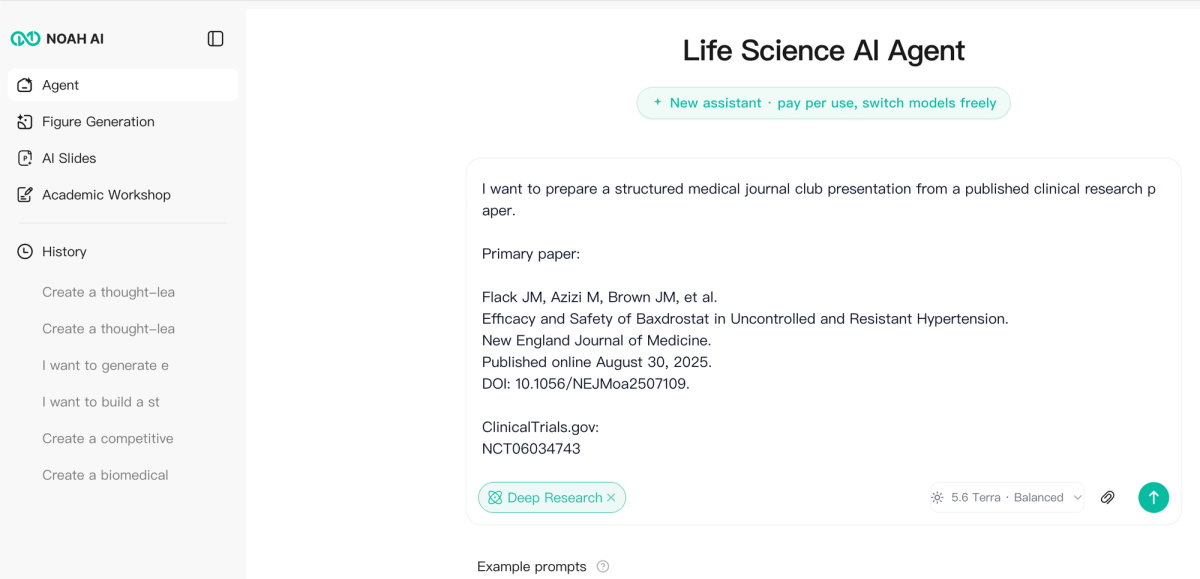
The workflow was run in Noah AI using Medical & Academia, Deep Research, and 5.6 Terra · Balanced.
Step 1 — Map What Is Already Known
Research idea generation should begin with the current evidence landscape.
In this case, the literature already supports several broad observations: clonal hematopoiesis is detectable before CAR-T in a substantial subset of heavily treated patients; baseline blood-count reserve and inflammatory markers are associated with hematologic recovery; prolonged cytopenia occurs in a clinically important subset; and mutation-specific clonal evolution, particularly involving TP53, deserves separate investigation.
However, the evidence does not support treating all CH mutations as biologically equivalent or interpreting CHIP positivity as a direct causal explanation for toxicity.
Step 2 — Extract Literature Signals Before Generating Ideas
A signal is a finding that could become part of a research hypothesis, but should not yet be treated as the final research idea.
Signals in this case included:
- binary CHIP status may be too coarse to explain hematologic outcomes;
- genotype and clone burden may contain additional information;
- TP53-mutated CH may behave differently from other CH genotypes;
- CH combined with elevated ferritin may identify patients with delayed recovery;
- baseline marrow reserve remains an important competing predictor;
- inflammatory HSPC maturation arrest is biologically plausible;
- post-CAR-T clone expansion can occur;
- prior melphalan, transplantation, and other therapies remain major alternative explanations.
Keeping these as separate signals prevents the AI system from prematurely converting correlation into causation.
Step 3 — Find Contradictions Instead of Hiding Them
Contradictory evidence can be one of the best sources of research ideas.
For example, one cohort may show little relationship between overall CHIP status and survival while another identifies delayed recovery when CH is combined with inflammation or identifies a stronger signal for specific mutation classes.
The useful question is not which study should be ignored. It is:
What variable could explain why the studies appear to disagree?
Possible explanations may include genotype, variant allele fraction, treatment history, disease context, baseline marrow reserve, inflammatory state, endpoint definition, product differences, or sampling time.
These explanations should remain hypotheses until they are directly tested.
Step 4 — Look for Underconnected Evidence
This is the most important step in the workflow.
Many useful biomedical ideas do not come from discovering a completely empty area. They come from recognizing that two evidence streams are usually studied separately even though a meaningful biological relationship may connect them.
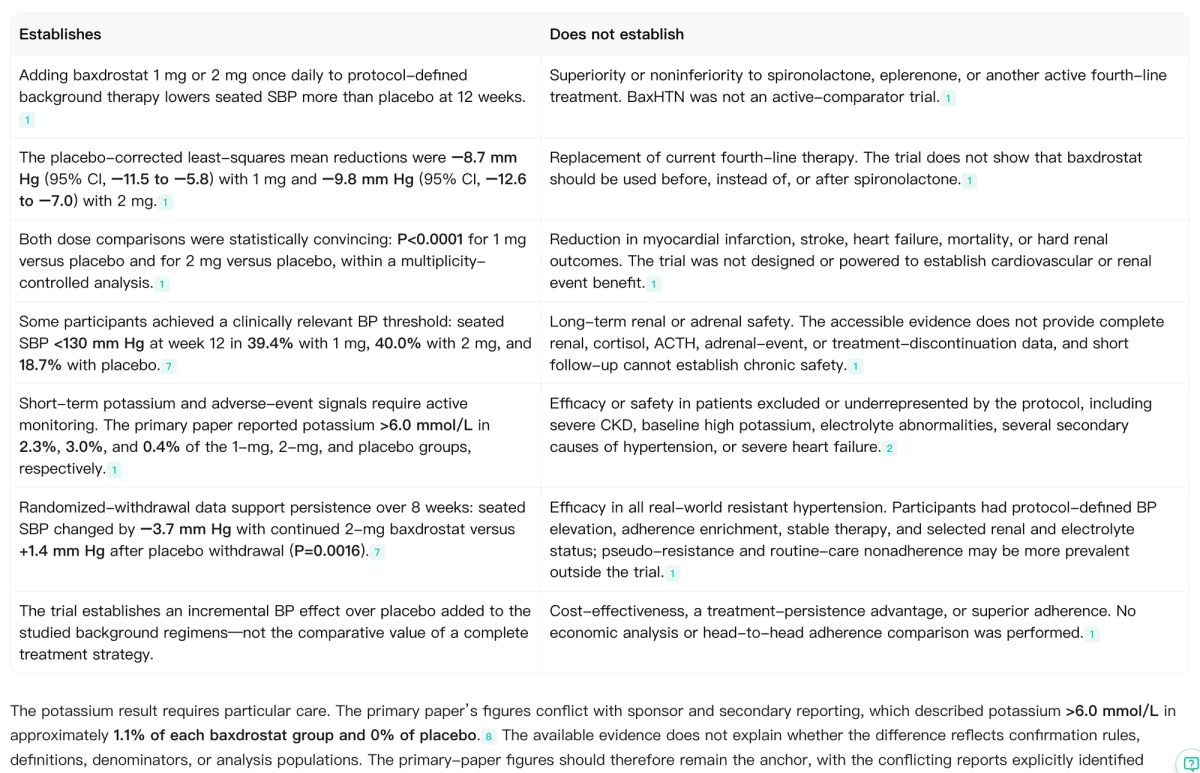
The underconnected-evidence analysis produced several candidate links.
| Connection | Potential research value |
|---|---|
| CH genotype/VAF → inflammatory response | Test whether specific clonal states identify a host prone to stronger inflammatory signaling rather than merely marking prior treatment. |
| CH plus inflammation → HSPC injury and delayed recovery | Connect molecular vulnerability with prolonged hematologic toxicity and test a candidate mediation pathway. |
| Baseline reserve → inflammatory toxicity and cytopenia | Determine whether CH and inflammation add information beyond routine baseline blood-count reserve. |
| Post-CAR-T clone expansion → prolonged cytopenia | Test whether expanding clones precede or accompany marrow failure before overt CCUS, MDS, or AML. |
Step 5 — Convert Connections Into Candidate Research Ideas
Once the evidence streams have been mapped, AI can propose candidate directions.
The key requirement is that every idea must remain connected to the evidence that generated it.
In the Noah case, candidate directions included:
- a composite host-marrow vulnerability model;
- TP53 clone dynamics after BCMA CAR-T;
- inflammation as a potential mediator of delayed recovery;
- dynamic prediction using longitudinal rather than baseline-only measurements;
- separating CAR-T-associated selective pressure from prior treatment effects;
- testing the clinical utility of CH-informed risk stratification.
These are more useful than a generic idea such as "study CHIP in CAR-T patients" because each specifies an unresolved relationship.
Step 6 — Check Whether the Idea Is Actually New
Novelty checking is essential because AI can easily generate an idea that sounds original but has already been studied.
A novelty check should ask:
- What is the closest existing study?
- What exactly did that study test?
- What part of the proposed idea remains unresolved?
- Is the idea genuinely new, or merely a replication?
- Would narrowing the population, mechanism, measurement, or design create a meaningful new question?
For example, the idea that CH combined with ferritin predicts delayed hematologic recovery should not be presented as new if that association has already been reported.
The more defensible research idea is narrower:
Does adding mutation-specific CH genotype, clone burden, and treatment-history variables improve calibrated prediction of prolonged cytopenia beyond CAR-HEMATOTOX and routine measures of marrow reserve?
Step 7 — Screen Candidate Ideas for Feasibility
Scientific interest is not enough. A useful idea must also be testable.
Feasibility assessment should consider:
- required cohort size;
- frequency of the outcome;
- availability of longitudinal samples;
- sequencing sensitivity and reproducibility;
- biomarker availability;
- duration of follow-up;
- confounding burden;
- number of model variables relative to events;
- availability of an external validation cohort;
- whether the required biological measurements can realistically be collected.
An idea can therefore be scientifically strong but operationally difficult.
Step 8 — Build a Final Research Idea Shortlist
The final output should not be a list of every idea the AI system generated.
Candidate ideas should be filtered based on evidence support, unresolved scientific value, novelty status, feasibility, and the study required to test them.
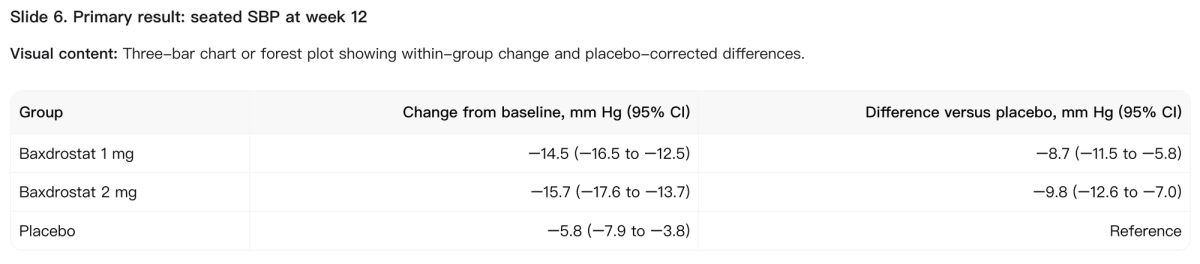
The final shortlist retained three directions:
| Research direction | Why it remains useful | Feasibility |
|---|---|---|
| Genotype/VAF-enhanced prediction beyond CAR-HEMATOTOX | Tests whether mutation-specific CH and clone burden provide incremental information beyond routine marrow reserve, inflammation, and treatment history. | Moderate |
| Serial TP53 and subthreshold-clone dynamics | Tests whether longitudinal clonal expansion predicts prolonged cytopenia or later myeloid disease beyond baseline clone burden and prior therapy. | Moderate |
| Clinical utility of validated CH-informed risk stratification | Moves beyond prediction and asks whether acting on a validated risk estimate can reduce clinically important complications without reducing access to effective CAR-T. | Moderate after validation |
Generate Evidence-Grounded Research Ideas with Noah AI
Use Noah AI to connect biomedical literature signals, identify contradictions and underconnected evidence, check novelty, screen feasibility, and turn retained ideas into focused research questions.
Noah AI can be used for free, includes free credits, and requires no credit card.
When to Use Each Tool
Noah AI: Structured Biomedical Idea Development
Noah AI is useful when the task extends beyond finding papers and requires multi-step biomedical analysis.
In this workflow, Noah was used to map the existing evidence base, identify literature signals, surface contradictory findings, connect evidence streams that are usually studied separately, generate candidate ideas, check novelty, evaluate feasibility, and produce a final research shortlist.
This makes it particularly useful when the final deliverable needs to preserve the path from evidence to hypothesis rather than produce a generic brainstorming list.
Learn more about Noah AI's human-in-the-loop research workflow: Noah AI Human-in-the-Loop →
Elicit: Build the Evidence Landscape
Elicit is useful when a proposed idea needs to be checked against a structured literature-review workflow.
Researchers can use paper search, screening, structured extraction, and synthesis to determine how much direct evidence already exists around a candidate question. This is particularly useful before making a novelty claim.
Consensus: Rapidly Check What the Literature Says
Consensus is useful for natural-language academic search and rapid synthesis across research papers.
For research idea generation, it can help test whether a proposed relationship already has a substantial evidence base, whether studies generally agree, and which nearby questions deserve deeper investigation.
Scite: Stress-Test the Evidence Behind the Idea
Scite is particularly useful when a research idea depends heavily on one or two influential findings.
Citation-context analysis can help determine whether later literature supports, contrasts with, or simply mentions those findings. That makes it useful for preventing a candidate idea from being built around an isolated result that has already been challenged.
ResearchRabbit: Discover Adjacent Evidence Streams
ResearchRabbit explores literature through citation relationships rather than only through isolated keyword results.
This is useful when researchers already have several seed papers and want to identify related clusters, influential earlier studies, newer papers, or adjacent research areas that might reveal an underconnected direction.
A Practical AI Workflow for Biomedical Research Idea Generation
| Stage | Question | Output |
|---|---|---|
| 1. Landscape | What is already established? | Evidence map |
| 2. Signals | Which individual findings could generate new directions? | Evidence signals |
| 3. Contradictions | Where do studies differ? | Competing explanations |
| 4. Connections | Which evidence streams are rarely studied together? | Underconnected evidence map |
| 5. Ideas | What testable direction follows from the connection? | Candidate ideas |
| 6. Novelty | Has the idea already been substantially addressed? | Retain, narrow, or discard |
| 7. Feasibility | Can it realistically be studied? | Feasibility screen |
| 8. Question | How should the retained idea be tested? | Focused research question |
Common Mistakes When Using AI to Generate Research Ideas
Asking AI to Brainstorm Without Literature
The resulting ideas may sound creative but have no demonstrated relationship to the actual state of evidence.
Calling Every Research Gap a Research Idea
A gap identifies what is missing. A useful research idea explains how that gap could be investigated.
Assuming "Understudied" Means "Important"
Some questions have little evidence because they are difficult, poorly defined, clinically unimportant, or biologically weak.
Claiming Novelty Without Checking Recent Literature
A topic should not be labeled novel simply because the exact phrase does not appear in a paper title.
Turning Association Into Causation
If CH and inflammation are associated with delayed recovery, that does not establish that one causes the other or that inflammation mediates the effect.
Looking Only for Supporting Evidence
Contradictory or null findings may be exactly what creates the more interesting research question.
Ignoring Prior Treatment and Confounding
In heavily treated populations, apparent post-treatment biology may have been shaped years earlier by chemotherapy, transplantation, age, disease burden, or other exposures.
Keeping Too Many Ideas
The purpose of the workflow is not to produce a large list. It is to narrow the literature into a small number of defensible directions worth deeper planning.
Where Human Review Is Still Required
AI can help researchers organize evidence, detect relationships across papers, identify disagreements, generate structured candidate ideas, and expose assumptions.
Human scientific review is still required to determine whether the proposed biological relationship is credible, whether the endpoint matters, whether the assay can measure the intended construct, whether confounding can realistically be addressed, and whether the idea deserves investment.
Researchers should also verify the primary studies underlying any important novelty or mechanism claim before moving the idea into protocol or proposal development.
Frequently Asked Questions
Can AI generate genuinely new biomedical research ideas?
AI can help identify potentially new combinations, contradictions, and underconnected relationships in the literature. Novelty still needs to be checked against recent primary research before the idea should be described as new.
Should I start with a research gap or a topic?
A defined research area is enough to begin. The workflow can first map the literature, identify unresolved relationships, and then determine which gaps are sufficiently important and testable to generate research ideas.
How many research ideas should AI generate?
Generating several candidates can be useful, but the final output should normally be much shorter. The goal is to retain only ideas that remain defensible after novelty and feasibility checks.
What is the difference between research idea generation and research question feasibility assessment?
Idea generation asks what new direction emerges from the literature. Feasibility assessment asks whether a specific question can realistically and meaningfully be studied.
Can AI determine that a research idea is novel?
AI can help perform a recent literature check and identify the closest existing studies. Researchers should still verify the most relevant primary literature before making a formal novelty claim.
What should happen after a research idea is selected?
The next stage is usually to convert it into a focused research question, assess feasibility, and then develop a structured research plan or proposal.
Related Research Guides
- Best AI Tools for Biomedical Research Question Feasibility Assessment (2026)
- Best AI Tools for Biomedical Research Proposal Development (2026)
- How to Conduct a Medical Literature Review with AI: Step-by-Step Guide (2026)
- How to Search PubMed for a Literature Review with AI
Final Takeaway
The best biomedical research ideas do not come from asking AI to be more creative.
They come from making the existing evidence easier to inspect.
Literature signals → Contradictions → Underconnected evidence → Candidate idea → Novelty check → Feasibility check → Research question
In the BCMA CAR-T case, Noah AI did not simply produce a list of possible topics. It first separated clonal, inflammatory, treatment-history, marrow-reserve, and toxicity evidence; identified relationships that remain incompletely connected; and then narrowed those relationships into a small number of research directions with explicit novelty and feasibility judgments.
That is a more defensible role for AI in research ideation: helping researchers see meaningful patterns in the literature while keeping uncertainty, conflicting evidence, and unanswered questions visible.
Generate Evidence-Grounded Research Ideas with Noah AI
Use Noah AI to turn biomedical literature into research ideas supported by evidence, novelty checks, and feasibility assessments.
Connect findings across studies, identify contradictions and underexplored relationships, and build a shortlist of testable research questions with explicit evidence gaps and research requirements.
Free to use · Free credits included · No credit card required