How to Analyze FDA and EMA Label Information with Noah AI
Linda
Learn how Noah AI helps medical, regulatory, market access, and biopharma teams analyze FDA and EMA label information, including indications, patient populations, dosing, safety warnings, contraindications, and regional differences.
FDA and EMA labels are essential regulatory documents for medical, regulatory, market access, Medical Affairs, and biopharma strategy teams. They define how a drug is approved, which patients are included, what dosing is recommended, what safety warnings must be considered, and how regional positioning may differ between the United States and Europe.
The challenge is that label review can be detailed and time-consuming. Teams may need to compare approved indications, patient populations, biomarker requirements, dosing language, contraindications, warnings and precautions, adverse reactions, and region-specific wording. A simple summary is often not enough, especially when teams need to prepare internal review notes, fair-balance materials, or market access discussions.
Noah AI helps teams turn FDA and EMA label information into a structured review workflow. Users can define a drug and label review scope, then use Noah AI to organize approved indications, dosing, safety language, contraindications, and regional differences into a review-ready summary with traceable references.
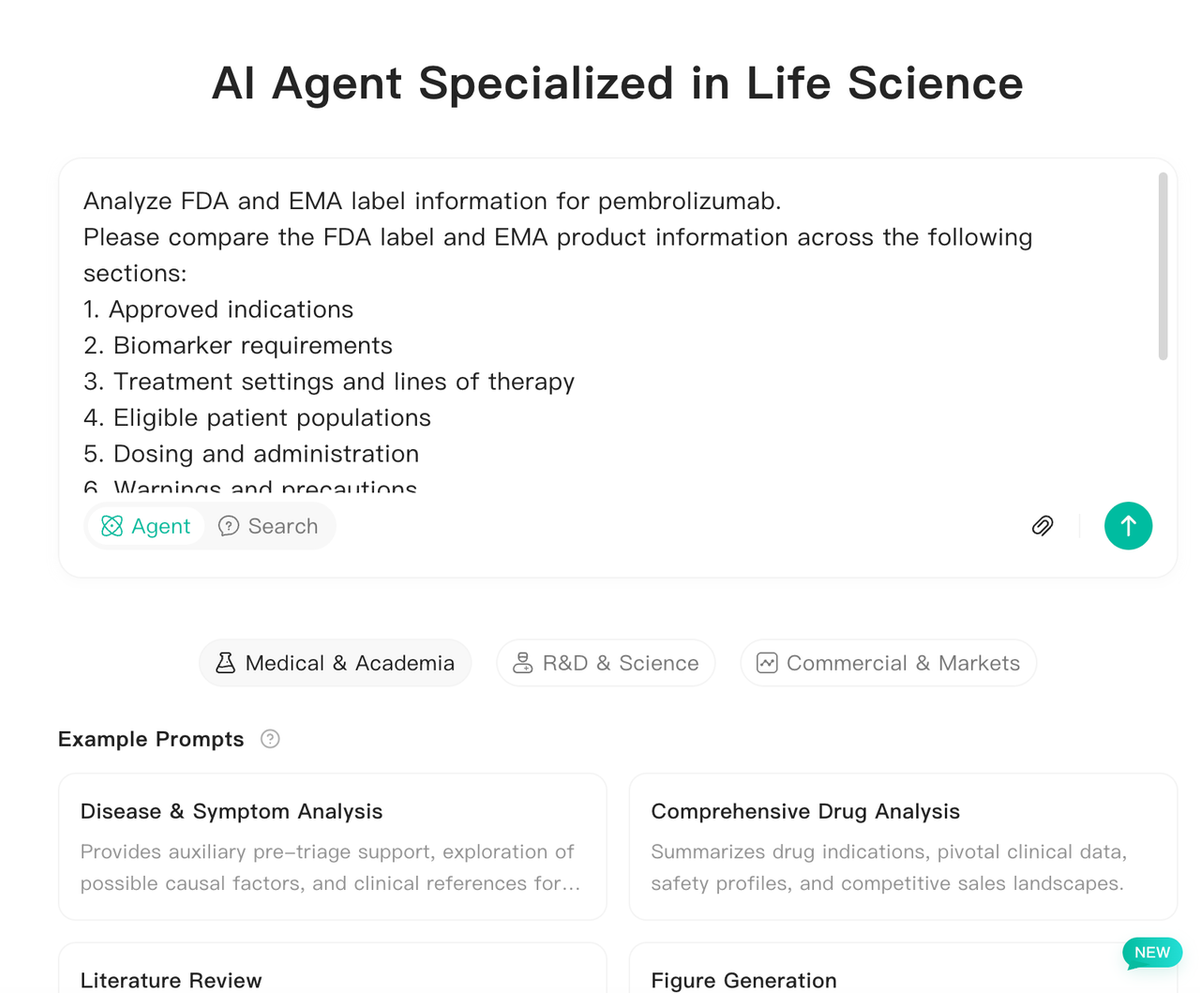
igure 1. Users can start a regulatory label review in Noah AI by entering a structured prompt that defines the drug, comparison scope, and key sections such as approved indications, biomarker requirements, dosing, and safety.
Why FDA and EMA Label Review Is Difficult
Drug label review is difficult because regulatory language is precise, region-specific, and frequently updated. A label is not only a list of indications. It also defines approved use, treatment setting, patient population, biomarker requirements, dosing and administration, contraindications, warnings, precautions, adverse reactions, and other safety language.
For global medical and commercial teams, the difficult part is not only reading one label. It is comparing label language across regions and understanding what the differences mean for medical, regulatory, market access, and commercial workflows. A therapy may have similar scientific rationale across regions, but the approved wording, eligible population, or safety framing may differ between FDA prescribing information and EMA product information.
This is why teams need a structured label analysis workflow rather than a generic summary. They need to know what was compared, where the information came from, and which sections require expert review.
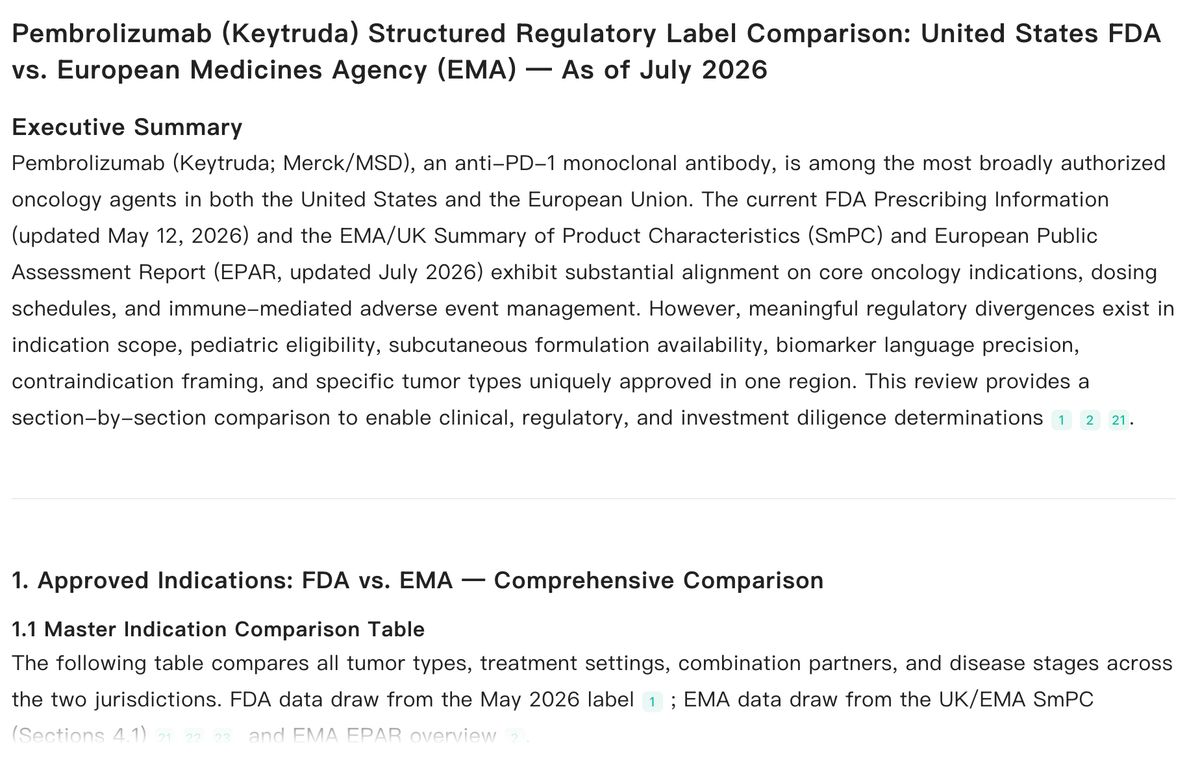
Figure 2. Noah AI generates an executive summary that highlights major similarities and regulatory differences between FDA and EMA label information for pembrolizumab.
What Should a Drug Label Analysis Include?
• Approved indications and treatment settings
• Eligible patient populations and disease stage
• Biomarker requirements or testing language
• Dosing and administration
• Contraindications
• Warnings and precautions
• Adverse reactions and safety language
• Region-specific differences between FDA and EMA wording
• Practical implications for medical, regulatory, market access, or commercial teams
How Noah AI Supports FDA and EMA Label Analysis
Noah AI is useful because label analysis starts from a structured medical and regulatory research question, not a generic prompt. Users can define the drug, regions, safety topics, and comparison scope, then use Noah AI to organize label language into a structured summary for expert review.
For example, a user can ask Noah AI to analyze FDA and EMA label information for pembrolizumab and compare approved indications, biomarker requirements, treatment settings, eligible patient populations, dosing, warnings, contraindications, and regional differences. Noah AI can then generate an executive summary and organize detailed comparison points into a table or structured section.
This helps teams move from scattered regulatory sources to a clearer review structure. The output is not a final regulatory conclusion, but it can provide a useful starting point for medical, regulatory, clinical, or commercial teams to review and validate.
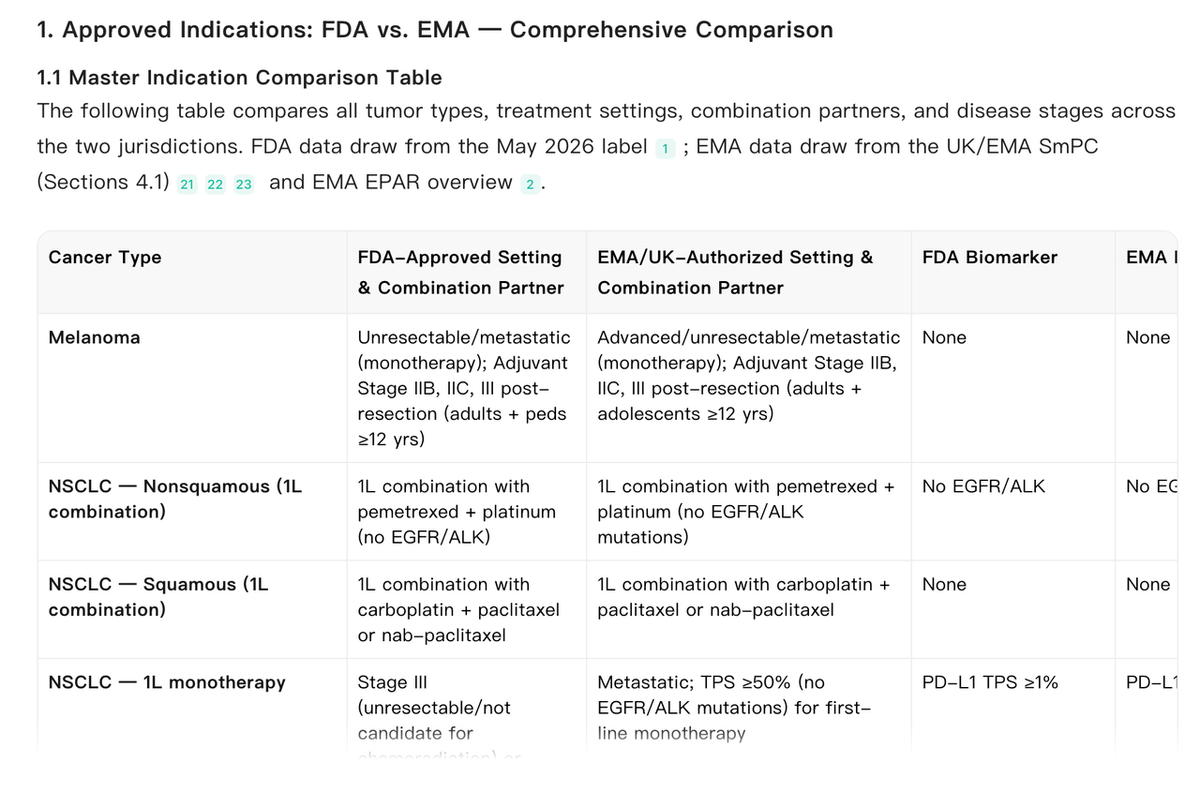
Figure 3. Noah AI organizes regulatory label information into a structured comparison table covering approved indications, treatment settings, combination partners, and biomarker requirements across FDA and EMA.
Step 1: Define the Drug and Label Review Scope
The first step is to define the drug, regions, and label sections that need review. For pembrolizumab, a team may want to compare FDA and EMA information across indications, biomarker requirements, treatment settings, dosing, warnings, and contraindications. A clear prompt helps Noah AI understand the desired output and comparison structure.
Step 2: Compare Approved Indications, Population, and Dosing
After the scope is defined, Noah AI can help organize label information into a section-by-section review. Teams can compare whether indications are aligned, whether patient populations differ, whether biomarker requirements are described differently, and whether dosing language is consistent across regions. This is especially useful for products with many approved indications or multiple treatment settings.
Step 3: Review Safety Warnings, Contraindications, and Regional Differences
Label analysis should also include safety language. Teams may need to examine contraindications, immune-mediated adverse reactions, warnings and precautions, monitoring requirements, and region-specific safety framing. Noah AI can help surface these sections in a structured way so expert reviewers can focus on interpretation, verification, and downstream use.
FDA and EMA Label Analysis Areas and How Noah AI Supports Them
| Label Area | Why It Matters | How Noah AI Helps |
|---|---|---|
| Indication | Defines approved use and treatment setting | Extracts and compares label wording |
| Patient population | Clarifies eligible patients and restrictions | Summarizes population scope |
| Safety language | Supports medical, regulatory, and risk review | Highlights warnings and contraindications |
| Regional differences | Shows FDA vs EMA positioning gaps | Organizes label differences by region |
When Should Teams Use Noah AI for Label Review?
Noah AI can be useful when teams need to prepare an initial FDA and EMA label comparison, review regional differences, summarize approved indications, identify safety language, or prepare structured notes for internal discussion.Medical Affairs teams may use the workflow to understand fair-balance considerations and indication language. Regulatory teams may use it to organize sections for expert review. Market access and commercial strategy teams may use it to understand approved use, eligible populations, and regional positioning. BD and investment teams may use it to evaluate whether label scope supports a commercial or strategic thesis.In all cases, Noah AI should support the review process rather than replace it. Final conclusions should be validated against original regulatory documents and reviewed by qualified experts.
Final Takeaway
FDA and EMA labels contain critical information for how a drug can be used, communicated, and positioned across regions. Reviewing them requires careful attention to approved indications, patient populations, dosing, biomarker requirements, safety language, and regional differences.Noah AI helps teams turn label review into a structured workflow. Users can define the drug and comparison scope, generate an executive summary, and organize FDA and EMA information into a comparison table for expert review. For medical, regulatory, market access, and biopharma strategy teams, this can reduce manual organization time and create a clearer starting point for label analysis.
FAQ
What is FDA and EMA label analysis?
FDA and EMA label analysis is the process of reviewing and comparing drug label information across the United States and Europe, including indications, eligible populations, dosing, safety warnings, contraindications, and regional differences.
How does Noah AI help analyze drug labels?
Noah AI helps users define a label review scope, organize FDA and EMA label information, compare approved indications and safety language, and prepare structured summaries for expert review.
Who can use Noah AI for label review?
Medical Affairs, regulatory affairs, market access, commercial strategy, BD, clinical strategy, and biopharma research teams can use Noah AI to support label review workflows.
Can Noah AI compare FDA and EMA differences?
Yes. Noah AI can help organize differences between FDA and EMA label information, such as approved indications, patient populations, dosing, safety warnings, and regional positioning. Users should verify outputs against original regulatory sources.
Can Noah AI replace regulatory review?
No. Noah AI can help organize and summarize label information, but final interpretation should be reviewed by qualified regulatory, medical, clinical, or legal experts.
Research and Compliance Disclaimer
This article is for research workflow education only. AI-generated label summaries should not be used as regulatory, legal, medical, clinical, investment, or commercial decision-making advice without review by qualified professionals. Users should verify label language, regulatory source documents, safety statements, indication wording, and regional interpretation before using any output in formal reports, external communications, promotional materials, or decision workflows.