How to Analyze Clinical Guidelines with Noah AI
Linda
Learn how Noah AI helps medical and biopharma teams search clinical guidance, identify relevant guideline sources, review diagnosis and management pathways, and prepare structured guideline summaries.
Clinical guidelines are essential for medical research, treatment strategy, Medical Affairs, clinical education, and biopharma decision-making. They help teams understand how expert organizations recommend managing specific diseases, which patient populations are prioritized, what diagnostic or treatment pathways are used, and how standards of care are changing over time.
The challenge is that guideline review can be time-consuming. Teams may need to search across disease areas, professional associations, guideline versions, treatment settings, evidence updates, and regional recommendations. A simple keyword search may find a document, but it does not always help users understand whether it is the right source, the latest version, or the most relevant pathway for a specific question.
Noah AI supports clinical guideline analysis through a structured Clinical Guidance workflow. Users can search guideline content by disease and association, open the relevant guideline structure, and use follow-up prompts to review diagnostic pathways, treatment positioning, and practical questions. The goal is not to replace expert clinical judgment, but to help medical and biopharma teams move from guideline discovery to organized review more efficiently.
Why Clinical Guidelines Are Hard to Analyze
Clinical guidelines are often long, specialized, and updated over time. A team reviewing a guideline may need to understand the disease context, diagnostic pathway, treatment sequencing, biomarker or patient subgroup considerations, and the evidence behind recommendations.
The difficulty is not only finding a guideline. The harder part is turning guideline information into a structured view that can support internal discussion, medical education, treatment landscape research, or strategic planning.
Teams may also need to confirm the source, publication date, version, and professional association behind the guideline before using it in a report or briefing. This is why a structured Clinical Guidance workflow can be more useful than a generic search experience.
What Makes Noah AI Useful for Clinical Guideline Analysis
Noah AI is useful because guideline review starts from a structured Clinical Guidance workflow. Users can search by disease area and professional association, then open the relevant guideline structure and continue with analytical questions in the built-in chat panel.
This workflow helps users move from “I need the right guideline” to “I need to understand the pathway, recommendation logic, and clinical implications.” Instead of treating the guideline as a static document, Noah AI supports a more interactive review process.
For medical and biopharma teams, this can be useful when preparing internal research notes, Medical Affairs materials, treatment landscape summaries, or disease-area training content.
Step 1: Search Guidelines by Disease and Association
The first step is to define the disease area and the relevant professional association. In Noah AI Clinical Guidance, users can filter guideline content by disease and association. For example, users can search for Anal Canal Cancer and select NCCN as the association to locate the relevant clinical guideline source.
This is useful because guideline analysis should begin with source clarity. Teams need to know which association issued the guideline, which disease area it covers, and whether the result is specific enough for the review question.
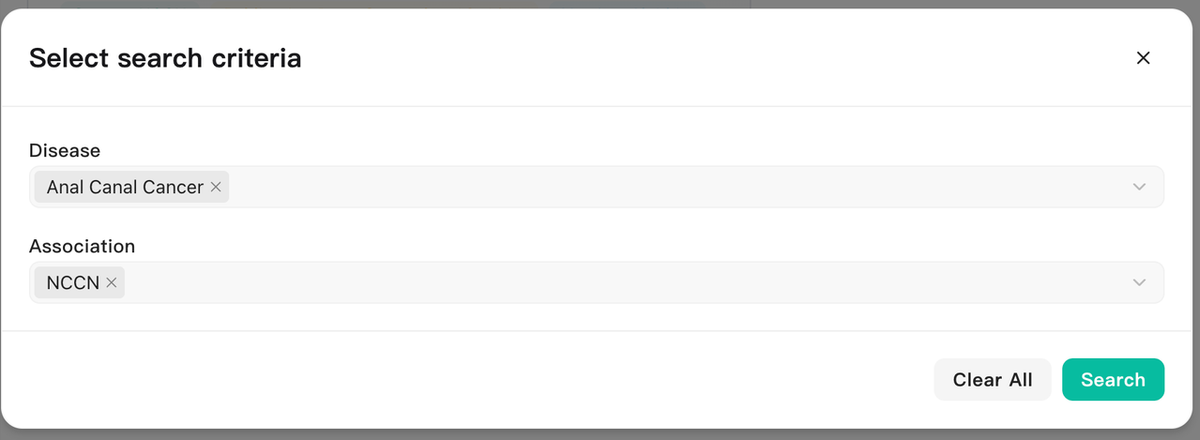
Figure 1. Noah AI allows users to search clinical guidelines by disease area and professional association, helping teams narrow the scope before review.
Step 2: Open the Guideline Structure and Review Follow-Up Questions
After identifying the relevant guideline, users can open the guideline structure for deeper review. In the example below, Noah AI shows the Anal Carcinoma guideline and a diagnosis and management pathway node. The right-side chat panel suggests follow-up analytical questions, such as extracting the patient diagnostic and therapeutic pathway or identifying guideline-recommended treatment regimens.
This turns guideline review into an interactive workflow. Users are not limited to reading a static result card. They can open the guideline context, review the pathway structure, and ask focused questions that support interpretation.
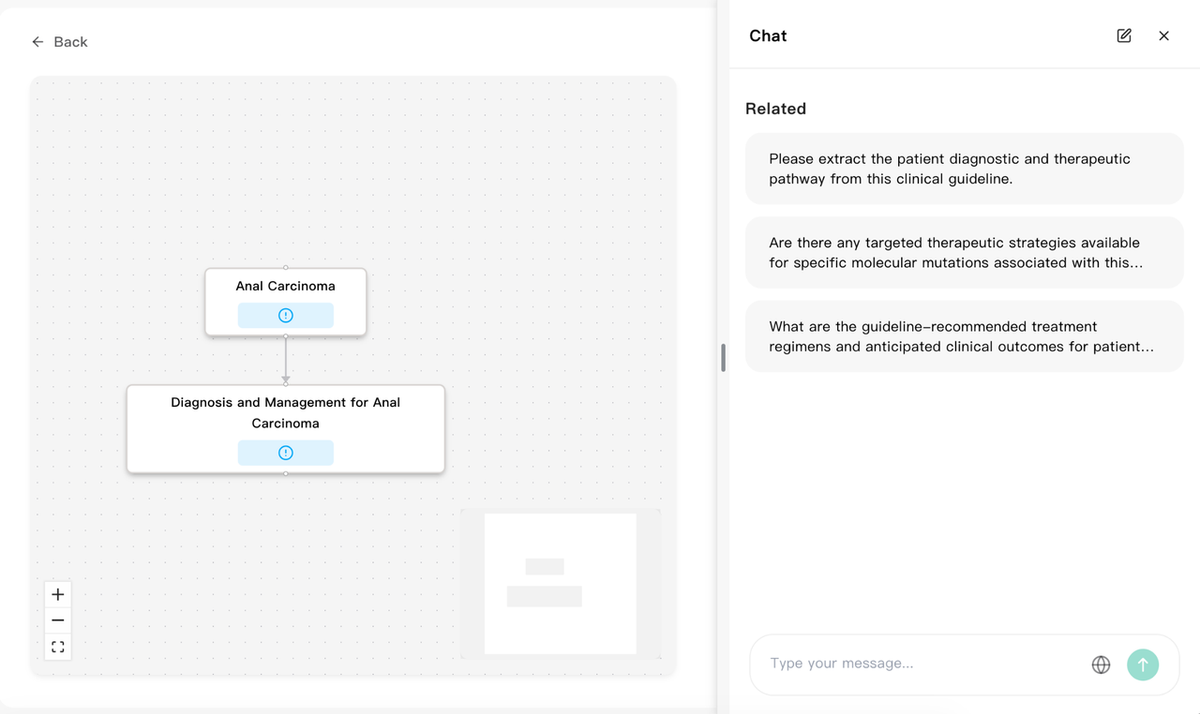
Figure 2. Noah AI expands the selected clinical guideline into a structured pathway view and suggests follow-up analytical questions for deeper interpretation.
Step 3: Turn Guideline Findings into Structured Medical Notes
Once users identify the relevant guideline and open the pathway structure, Noah AI can support more focused review. Teams can ask Noah AI to extract diagnostic steps, summarize treatment pathways, identify recommendation areas, or prepare structured notes for internal discussion.
This is especially useful for Medical Affairs, MSL, clinical strategy, and research teams that need to move quickly from guideline source discovery to practical interpretation. Noah AI helps organize the review process, while the final interpretation should still be checked by qualified medical or clinical experts.
| Guideline Analysis Task | What Teams Need | How Noah AI Helps |
|---|---|---|
| Recommendation review | Key treatment guidance | Summarizes major guideline recommendations |
| Pathway interpretation | Diagnosis and management flow | Organizes guideline content into structured review points |
| Evidence context | Why recommendations matter | Supports follow-up questions around clinical rationale |
| internal education | Clear medical summary | Turns guideline content into structured notes |
Common Use Cases for Medical and Biopharma Teams
Medical Affairs and MSL Preparation
Medical Affairs teams can use Noah AI to locate guideline sources, review treatment pathways, and prepare structured notes for internal education or field medical discussions.
Clinical Strategy Review
Clinical strategy teams can use guideline analysis to understand treatment pathways, patient segmentation, and recommendation context in a disease area.
Disease Area Training
Training teams can turn guideline content into structured learning materials, helping new team members understand disease management pathways faster.
Market Access and Commercial Context
Market access or commercial teams can review how guideline recommendations frame standard of care, eligible populations, and treatment positioning.
When Should Teams Use Noah AI for Guideline Review?
Noah AI is especially useful when teams need to identify the right clinical guideline, confirm the guideline source, open the guideline structure, extract diagnostic or treatment pathways, or turn guideline content into structured notes.
It is less suitable for making final clinical decisions without expert review. Clinical guideline interpretation should always be validated by qualified medical, clinical, regulatory, or scientific professionals before formal use.
Final Takeaway
Clinical guidelines are critical for understanding disease management, treatment positioning, and standards of care. But finding and reviewing the right guideline can take time, especially when teams need to connect source, version, pathway structure, and practical interpretation.
Noah AI helps medical and biopharma teams start from a structured Clinical Guidance workflow. Users can search by disease and association, open guideline structures, and continue with analytical questions that support guideline review. For teams preparing research notes, internal education, or medical strategy materials, this can create a clearer starting point for expert-reviewed work.
Ready to analyze clinical guidelines with Noah AI? Try Noah AI.
FAQ
What is clinical guideline analysis?
Clinical guideline analysis is the process of reviewing treatment guidelines to understand recommendations, diagnostic pathways, treatment settings, patient populations, evidence context, and practical implications.
How does Noah AI help analyze clinical guidelines?
Noah AI helps users search clinical guidance by disease and association, open guideline structures, and use follow-up prompts to organize diagnostic and treatment pathway information into structured review notes.
Who can use Noah AI for guideline review?
Medical Affairs teams, MSLs, clinical strategy teams, biopharma researchers, physicians, consultants, market access teams, and internal training teams can use Noah AI to support guideline review workflows.
Can Noah AI replace clinical judgment?
No. Noah AI can help organize and summarize guideline information, but final interpretation should be reviewed by qualified medical, clinical, regulatory, or scientific experts.
Can Noah AI help prepare internal guideline summaries?
Yes. Noah AI can help turn guideline content into structured notes for internal review, training, or briefing preparation, as long as the output is reviewed and validated before formal use.
Research and Compliance Disclaimer
This article is for research workflow education only. AI-generated guideline summaries should not be used as clinical, regulatory, medical, or treatment decision-making advice without review by qualified professionals.
Users should verify guideline source, publication date, version, recommendation wording, evidence context, and clinical interpretation before using any output in formal reports, external communications, training materials, or decision-making workflows.